
When Marketing Gets a Mind of Its Own: Inside the World of AI Agents
Published on
Executive Summary
Agentic AI and autonomous, objective-oriented computational frameworks are rapidly reshaping marketing. Unlike traditional automation (rules-based scripts or multi-purpose AI tools), agentic systems can sense, plan, and act on campaigns independently.
Industry analysts note that "AI-powered agents and agentic tools are among the industry's buzziest terms in 2025, because these solutions can actually perform tasks rather than just make suggestions."(1) In practical terms, this means marketing campaigns can be run and optimized around the clock, with AI agents handling the intricate details.
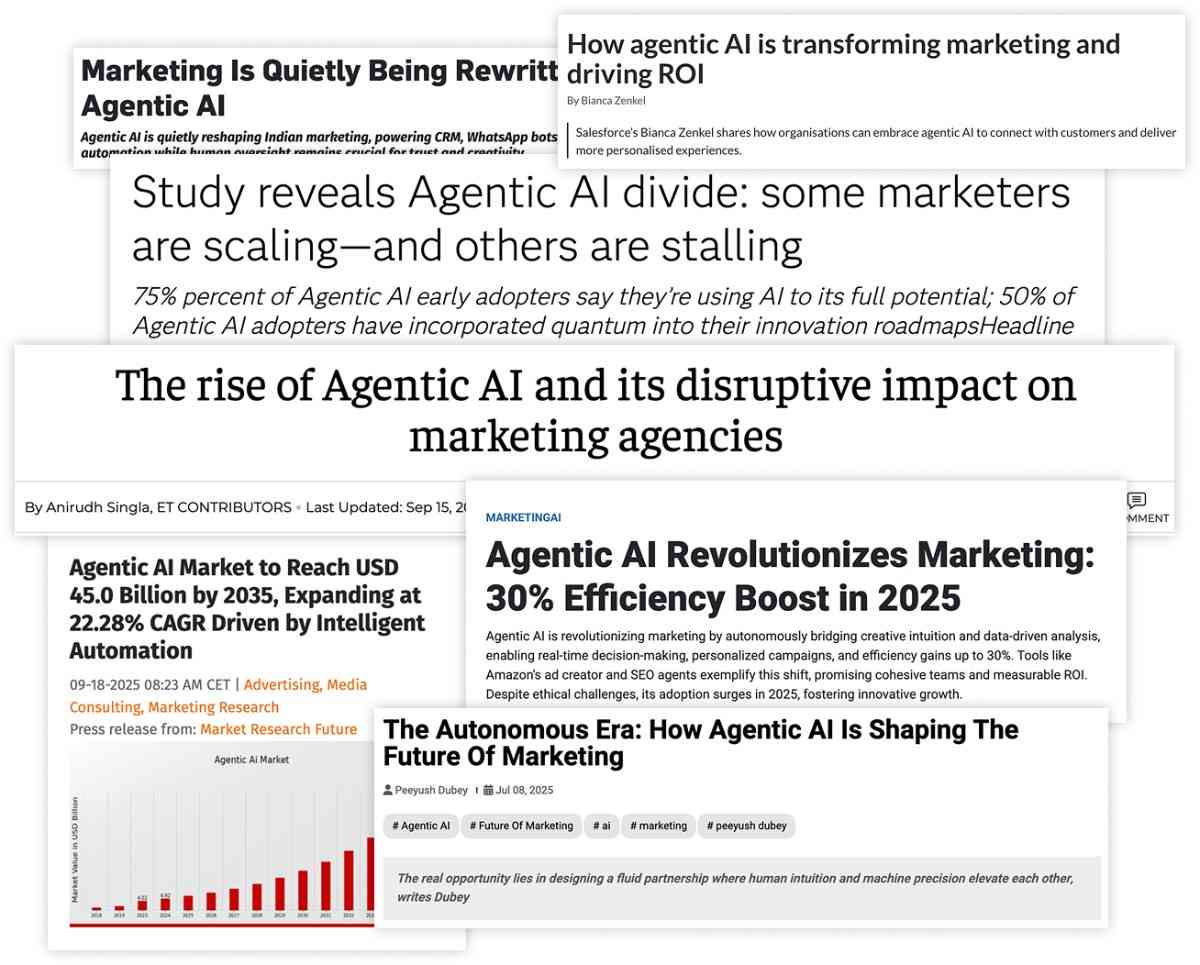
Early adopters are already seeing dramatic gains (for example, campaigns that once took weeks to launch now can go live in a day, with continuous minute-by-minute optimization).(2) To achieve this, modern AI frameworks increasingly leverage standardized coordination protocols such as Model Context Protocol (MCP), enabling distributed agents to share state, exchange context, and invoke tools within complex ad ecosystems.
Marketers worldwide must pay attention: A 2025 IAB report found 70% of agencies and brands have not yet fully integrated AI across planning, activation, and analysis, but over half expect to reach full integration by 2026.(3)
In short, the shift from conventional automation to autonomous, agentic marketing is underway, promising faster adaptation, hyper-personalization, and continuous optimization. For marketing leaders, it is not just a technical evolution but a strategic opportunity to redefine how campaigns are run, measured, and scaled.
The Evolution of Agentic AI and Its Applications in Marketing
Today's "smart" marketing tools are largely data-responsive toolkits: predictive models for targeting, bid-optimization algorithms, or AI content generators. These are powerful, but fundamentally they react to data under fixed rules. As industry observers explain, "for years, artificial intelligence in advertising has been synonymous with automation: Machines crunching numbers, optimizing bids, or scoring creatives."(4) In this model, AI accelerates tasks, but every campaign still follows a predefined pipeline. By contrast, agentic AI introduces true autonomy.
Agentic systems are wired to operate as autonomous goal-pursuing entities capable of interpreting intent, constructing multi-step execution plans, and adapting dynamically to real-time conditions without requiring continuous human intervention. Unlike conventional automation, which executes predefined logic, AI agents use probabilistic reasoning and reinforcement learning to make context-aware decisions across the funnel.
They do not simply highlight insights or generate outputs; they actively ingest live feedback signals, evaluate strategic context, and "orchestrate" cross-functional actions.
Through this architecture, agentic systems function more like self-directed optimization loops than mere task-execution engines.
This is an important evolution. In practice, agentic AI leverages large language models (LLMs) and advanced machine learning (ML) to give systems a degree of reasoning and situational awareness.
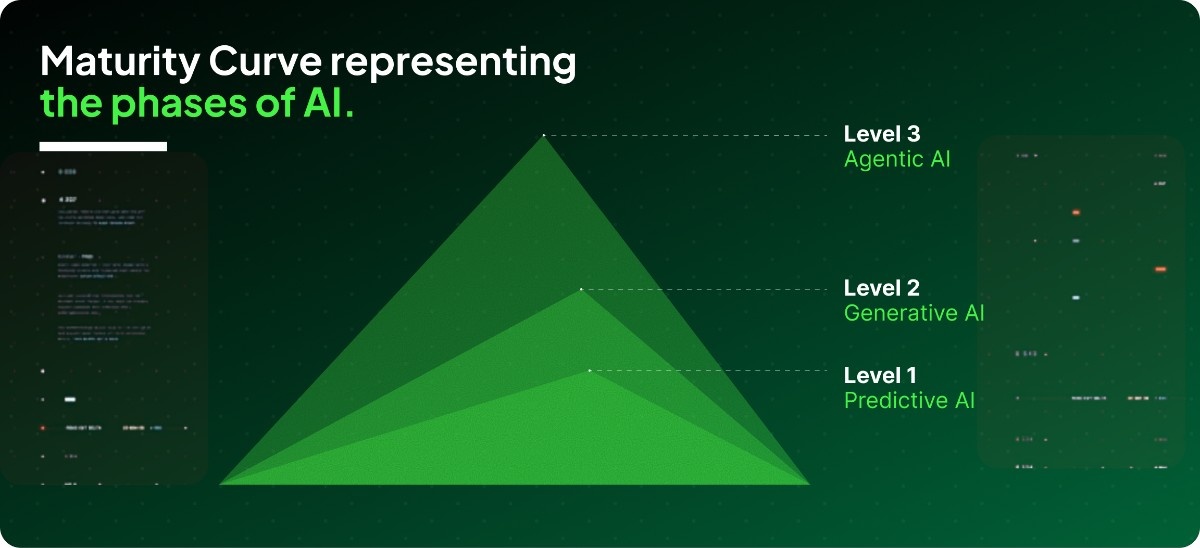
For example, an agentic system might interpret a campaign brief (understand business goals and brand strategy), continuously gather data (real-time user engagement and market trends), and then autonomously adjust bids, targeting, and creative assets on the fly. As an industry, we have effectively moved from "predictive" (phase 1) and "generative" (phase 2) AI to this third phase of autonomy.
Inside the Agentic Model: MAPE-K Cycles
An agentic marketing architecture consists of multiple specialized AI agents operating under a coordination schema, often built on emerging standards such as Model Context Protocol (MCP). This framework enables agents to share stateful context, invoke tools, and maintain synchronized decision-making across the marketing stack.
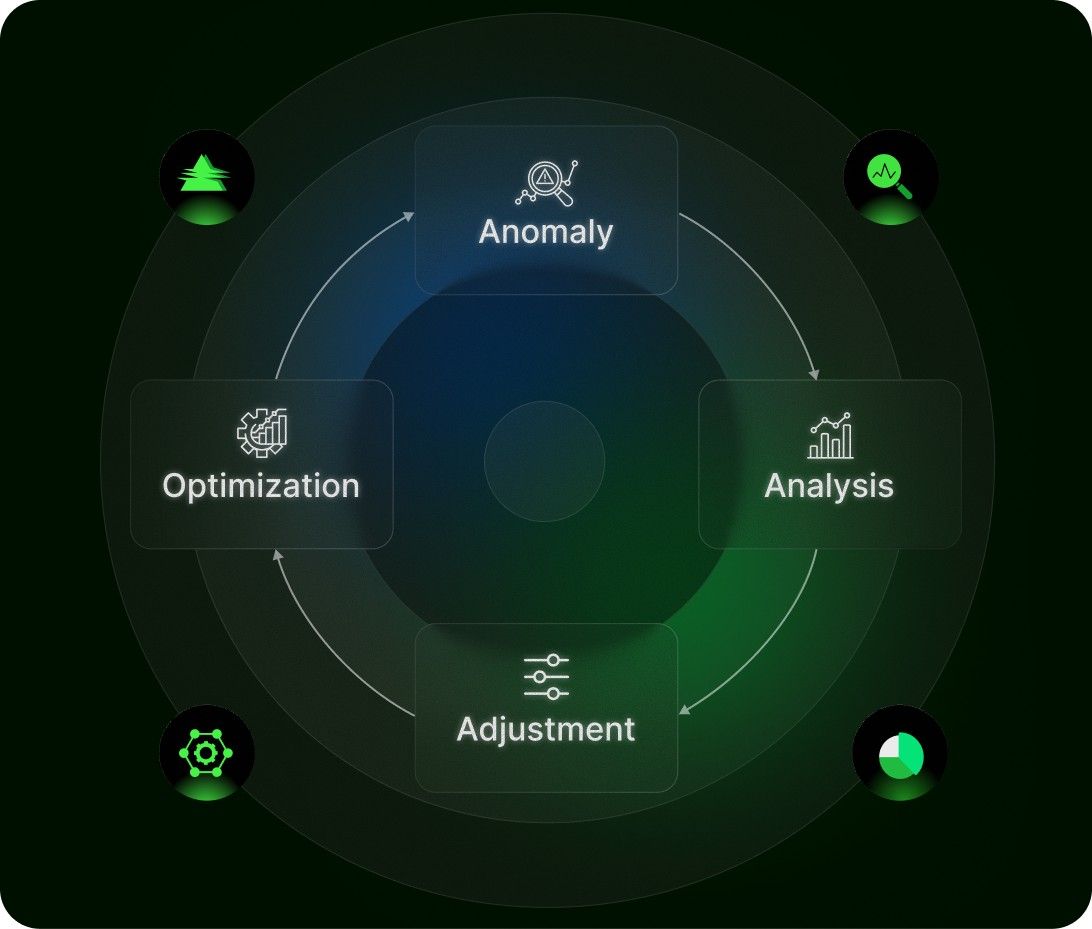
Agents interact with normalized data streams (e.g., performance signals, creative metadata) through structured APIs, while the orchestration layer manages MAPE-K cycles: Monitoring, Analyzing, Planning, Executing, and Knowledge. This allows AI agents for marketing to perform tasks such as bid simulation, pacing recalibration, and creative scoring within brand-defined constraints without requiring continuous human supervision.
Purpose-built AI agents can be embedded into the platforms marketers use every day (DSPs, ad servers, programmatic systems). Instead of a linear pipeline, this setup uses event-driven triggers and inter-agent messaging. For example, a performance anomaly detected by one agent becomes an input for another's decision node, enabling closed-loop optimization. All actions remain within a governed environment that enforces compliance policies and brand guidelines.
Agents can run with normalized data, make fast decisions, and execute the work. For example, they can launch campaigns, pace campaigns, and check tags within clear brand constraints.
In practice, this means less time spent on manual campaign configuration or monitoring pacing, and more time spent on strategy.
To sum up, an agentic marketing system is a group of AI teammates, each specializing in facets of the funnel, communicating through a unified control layer. They perceive signals (traffic, conversions, social sentiment), decide (optimize bids, pick creative, adjust segment weights), and execute (place orders, generate content, send emails) continuously and autonomously.
The Climaty AI Approach to Agentic Marketing
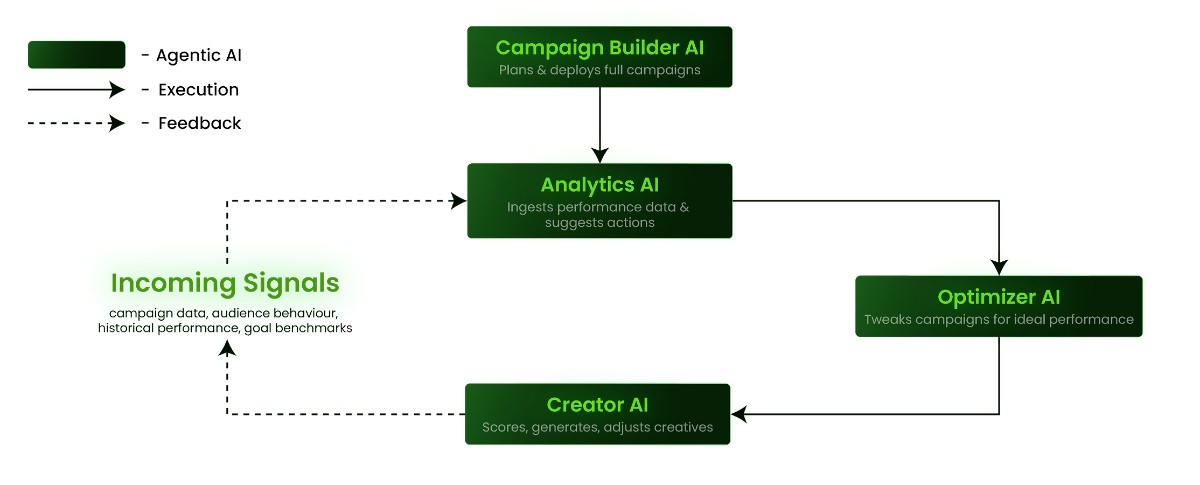
Climaty AI's platform is structured as a multi-agent system, operating within a stakeholder-governed orchestration layer. Each AI agent is built to manage distinct marketing functions using advanced reasoning, structured data, and seamless platform integrations. Together, they deliver a coordinated, high-precision ecosystem that supports real-time marketing decisions while staying within brand and compliance boundaries.
All agents operate within a secure Brand Vault, where brand rules, creative assets, and governance protocols are stored, ensuring recommendations and actions remain consistent with organizational requirements.
Optimizer AI
Optimizer AI serves as the advisory and decision-support layer for campaign delivery. It surfaces platform-level inefficiencies and offers actionable adjustments that marketing teams can review and approve at machine speed.
- Budget & Bid Management
- Precision Audience Targeting Module
- Algorithmic Bid-Pacing Engine
The setup enables continuous learning and adaptive decision-making within a governed environment. Brand-specific parameters including tone, legal requirements, and privacy obligations are applied throughout the process, ensuring that recommendations operate within predefined boundaries. This approach delivers operational efficiency while maintaining compliance and contextual integrity, allowing marketing teams to oversee high-volume optimization without relinquishing control.
When Agents Run the Campaign: What Actually Changes
AI agents turn marketing into a faster, more adaptive, and more collaborative endeavor. Marketers still set the destination (KPIs, brand strategy), but the agentic “engine room” constantly drives the campaign forward, adjusting course as needed.(2) This opens big opportunities, such as greater efficiency, true 1:1 personalization, and continuous optimization. It also means that marketers must learn to work with agents, defining clear goals and guardrails for them.
The experience of running a campaign changes dramatically once autonomous agents are in control. Instead of human teams reviewing dashboards and triggering adjustments manually, decisions are made at machine speed and executed directly within the marketing stack.
Five major shifts redefine the marketing experience when autonomous agents manage live campaigns. Consider a live campaign where performance begins to drift. Agents immediately detect the deviation and take action. Targeting is refined, spend is rebalanced across channels, and a new creative variant can be tested on the fly. The flow can be further refined when each agent collaborates with others in the system. A signal flagged by one agent can become input for another’s decision node, ensuring campaigns stay synchronized under one strategic umbrella.
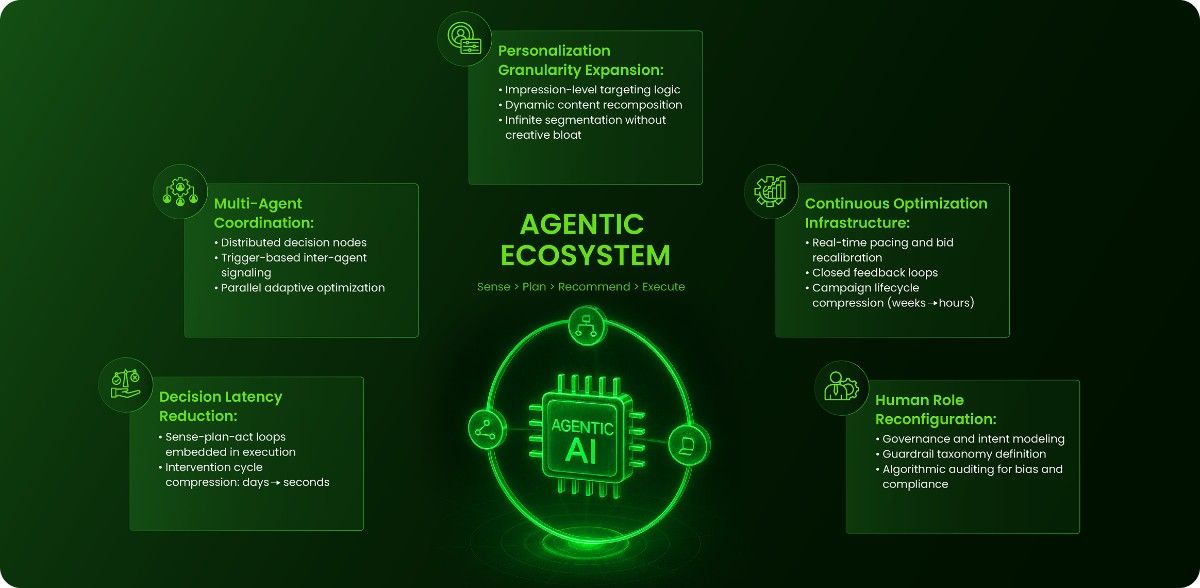
Agents enable much deeper personalization. Traditional targeting often groups users broadly; agentic systems can tailor messages to very narrow segments or even individuals. As one marketer explains, agents can process massive datasets to offer “personalized content to millions of customers in real time,” dynamically adjusting offers and messaging based on each user’s behavior.(6) The result is campaigns that feel uniquely relevant to each user, boosting engagement and conversion.
Since agents can function 24/7, marketing becomes continuously optimized. Campaigns that once required lengthy performance reviews can now tune bid prices and creative dozens of times per hour. In practice, this has translated to dramatic improvements: some teams report cutting campaign launch times from weeks to a single day, and doubling or tripling ROI metrics once agents are in place.(2, 4)
Marketing becomes less about managing tools and more about managing intent. And the tools will be smart enough to keep up.
Risks and Guardrails
Autonomous agents bring new capabilities, but also new risks. The core danger is misalignment: an agent tuned purely for short-term metrics might chase click-throughs at the expense of brand integrity or ethics. This “performance vs. brand safety” tradeoff must be managed. Encouragingly, the same technology can help by monitoring compliance signals and routing deviations to human approvers before they escalate.
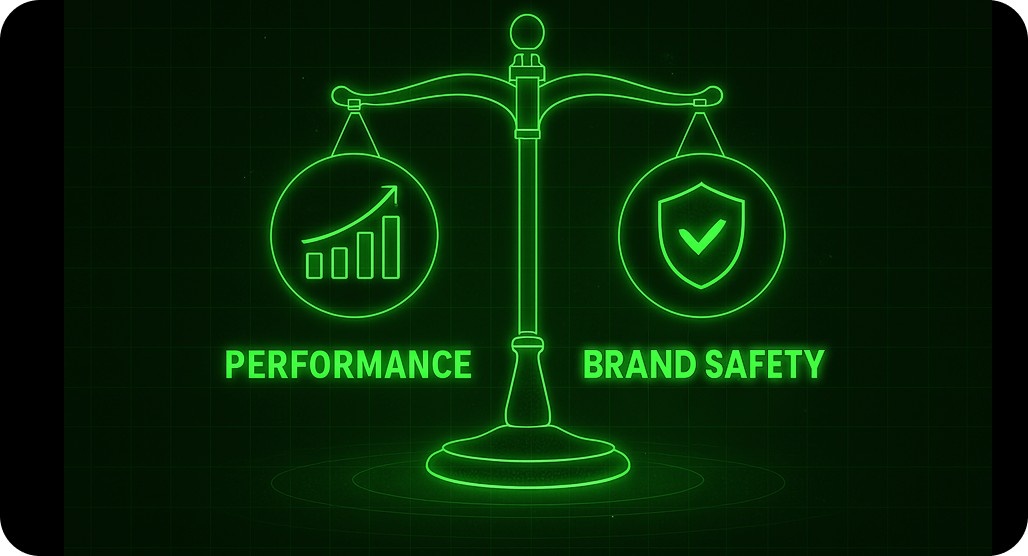
Every agentic system needs a human-in-the-loop framework. Experts advise starting campaigns with clear, strategic KPIs and guardrails, then letting the agents operate within those boundaries.(4) This means building override logic (e.g., “shift budget by 10% from underperforming channels”), escalation paths (alerts when performance deviates dramatically), and explainability tools (agents should log why they made each decision). Modern platforms are designed with this in mind, so marketers keep final sign-off on key moves even as agents recommend adjustments.
1. Regulatory and Ethical Compliance
Autonomous marketing must respect laws and standards. The EU’s new AI Act, for example, classifies most advertising and marketing AI as low risk.(7) That means routine marketing uses are permitted, but companies must maintain transparency and document how their agents operate.
Privacy regulations (GDPR, CCPA) still apply; agents should only use ethically consented data and avoid prohibited practices. Industry bodies expect more guidance to come, but the principle is simple: treat agentic systems like any other marketing technology with privacy and truth-in-advertising requirements.(7)
2. Brand Guardrails
Marketers must codify brand standards so agents can’t “hallucinate” undesirably. Embed the editorial style guide, creative templates, and legal rules directly into the agents’ operating parameters. Regular audits and feedback loops—adjusting the AI’s “temperature” or fine-tuning data—keep agents aligned with brand integrity.(8)
In summary, the key guardrails are visibility and control. Always know what your agents are doing, and make it easy to override them. Build governance policies (cross-functional committees, clear approval workflows) that cover AI-driven marketing. Coupling autonomy with strong oversight lets marketers reap agentic AI’s benefits without losing control or risking brand safety.

What’s Next for Agentic AI in Marketing

Looking ahead, agentic AI is poised for deeper integration and more proactive use cases:
- Fully Autonomous Planning
Soon, AI agents may craft entire media plans without human input. Given a budget and objective, an agent could automatically select channels, set initial bids, build audiences, and execute the campaign end-to-end—then continuously refine the plan in flight. Analysts anticipate that this level of autonomy will unlock unprecedented efficiency, ensuring every dollar of ad spend is maximized for ROI.(6)
- Real-Time Creative Swaps
Another frontier is in-flight creative optimization. Agents could continuously A/B test and swap ad creatives, personalizing content per user in real time. This moves personalization beyond targeting to the ad itself, and some platforms are already exploring generative creative on demand.
- Predictive Spend Allocation
Agents will get better at forecasting and moving budgets ahead of trends. Using predictive analytics, an agent could foresee that a certain audience will surge in interest and proactively increase that channel’s budget, or shift spend away before performance dips. Marketing becomes truly forward-looking rather than reactive.
- Sustainability and Privacy Integration
The next generation of agentic marketing must align with broader mandates. Expect more agents that optimize not just for performance metrics, but for environmental impact—favoring green data centers or adjusting message timing to off-peak hours. Upcoming regulations will push agents to rely on first-party data and privacy-preserving analytics, embedding consent logic and differential privacy so every personalization step respects consumer trust.
Key Takeaways
As autonomous agents become more deeply embedded in the marketing workflow, strategic processes become more deliberate. With Climaty AI, brands deploy systems that act within clearly defined goals, brand-safe governance frameworks, and controllable parameters.
Marketers who succeed with agentic systems structure their teams, data, and decision-making processes to work alongside AI, not simply monitor it.
Climaty AI also gives marketing leaders visibility into agent behavior. You retain control over campaign goals, budget thresholds, creative review cycles, and escalation triggers—the result is a working model where agents execute, humans oversee, and both evolve together.
1. Autonomy Upgrades Control
Agentic AI gives marketers more power. Automating routine execution under a framework of rules and human oversight allows marketers to focus on strategy and creativity. Going forward, marketers need to treat these agents with strong guardrails and continuous monitoring.(8)
2. Teams Must Collaborate with AI Agents
Marketers should think of agents as collaborators. Agents execute while humans steer. Agencies and brands should invest in skilling their teams to work alongside AI, defining clear goals, interpreting AI-driven insights, and infusing judgment where needed.
3. Focus on Governance and Ethics
The rise of autonomous agents demands rigor in governance. Companies should establish AI policies, ethics reviews, and compliance checks as a routine part of campaign planning. Brand templates and legal rules must be codified from day one, with human oversight verifying outputs and keeping every decision traceable.
4. Shifting Early is the Competitive Edge
The new leaders in marketing will be those who adopt intelligent systems faster. Agentic AI lets brands work more nimbly, iterating and learning in real time. Marketers who embrace agentic AI, keep human insight in the loop, and treat these systems as collaborators will unlock powerful new levels of performance and creativity.
References
- Google Unleashes Autonomous AI Agents for Marketers
- Agentic AI For Marketing: Best Use Cases & Software
- https://www.iab.com/wp-content/uploads/2025/03/IAB_State_of_Data_2025_March_V2.pdf
- From Automation to Autonomy: How Agentic AI Is Rewriting the Rules of Adtech - Infillion
- Agentic AI Will Transform Media Buying—Starting From the Inside Out
- Autonomous AI Agents & the Future of Digital Marketing
- Marketing sits in a gray zone under EU AI Act | IAPP
- Guardrails and governance: How to protect your brand while using AI | MarTech
- Scope3 Takes on IAS, DoubleVerify With Custom AI Agents for Brand Safety
- Introduction - Model Context Protocol
- Exploring Sequence Models: From RNNs to Transformers
- Model Context Protocol (MCP) vs. APIs: The New Standard for AI Integration | by Tahir | Medium
- MCP Demystified: Architecture and Working Explained



