
When Ads Enter AI Conversations, What Changes for Brands
Published on
A media plan can be perfectly built around the right audience and still miss the customer's actual reason for buying.
That is becoming more visible in AI conversations.
A customer may never search for the exact product category. What they share can reveal an unexpected connection between their circumstances and what a brand offers. These connections are difficult to anticipate through manual planning alone: knowing who might buy does not tell a marketer what will make the product matter to them now.
Digital advertising has spent years getting better at predicting intent from searches, browsing behaviour, audience signals and conversion data. Conversational AI adds another layer: customers can explain the situation behind that intent, giving media systems more context to interpret when an offer could be useful.
For brands, this broadens the opportunity beyond the obvious buying signal. It becomes possible to recognise demand through the circumstances creating it—even before the customer knows which product category to look for.
The shift is towards understanding more of the situations that bring a customer to the brand, and building relevance around the ones the product can genuinely address.
From predicting the query to understanding the situation
Search transformed advertising because intent became visible.
Someone searching for "CRM software for small business" gives a CRM provider a clearer signal of demand than a broad business-owner profile. Performance marketing became increasingly sophisticated at combining these signals to predict who was most likely to respond.
Conversational advertising builds on that model. The difference is how much of the customer's situation can become visible.
Instead of typing "project management software," someone might explain that client approvals keep getting lost in email, their team works across three countries and clients need a simpler way to review work.
ChatGPT Ads can use that context, alongside advertisers' descriptions of relevant use cases, to help select an appropriate ad. The opportunity for a brand is to connect its offer to the specific reason someone needs the product.
The same product can enter the conversation from different directions
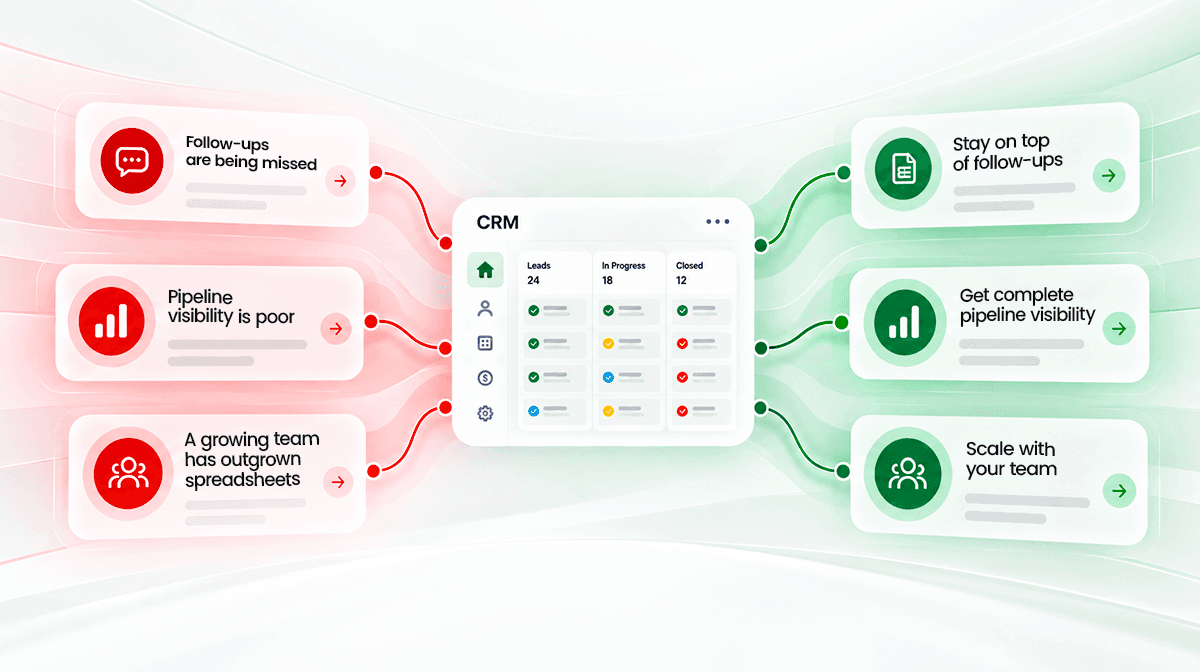
A CRM may become relevant because follow-ups are being missed, pipeline visibility is poor or a growing team has outgrown spreadsheets. The product category is the same, but the reason to buy is different.
Those differences should shape which benefit the ad leads with, even when the audience and product stay the same. A generic CRM message may fit the category without addressing the problem that prompted the conversation.
The challenge for brands is therefore not simply to create more messages. It is to recognise the different situations that generate demand and connect each one to a benefit the product can deliver.
Early campaigns are already showing what that looks like
Some of the first conversational-ad campaigns are being structured around specific customer needs.
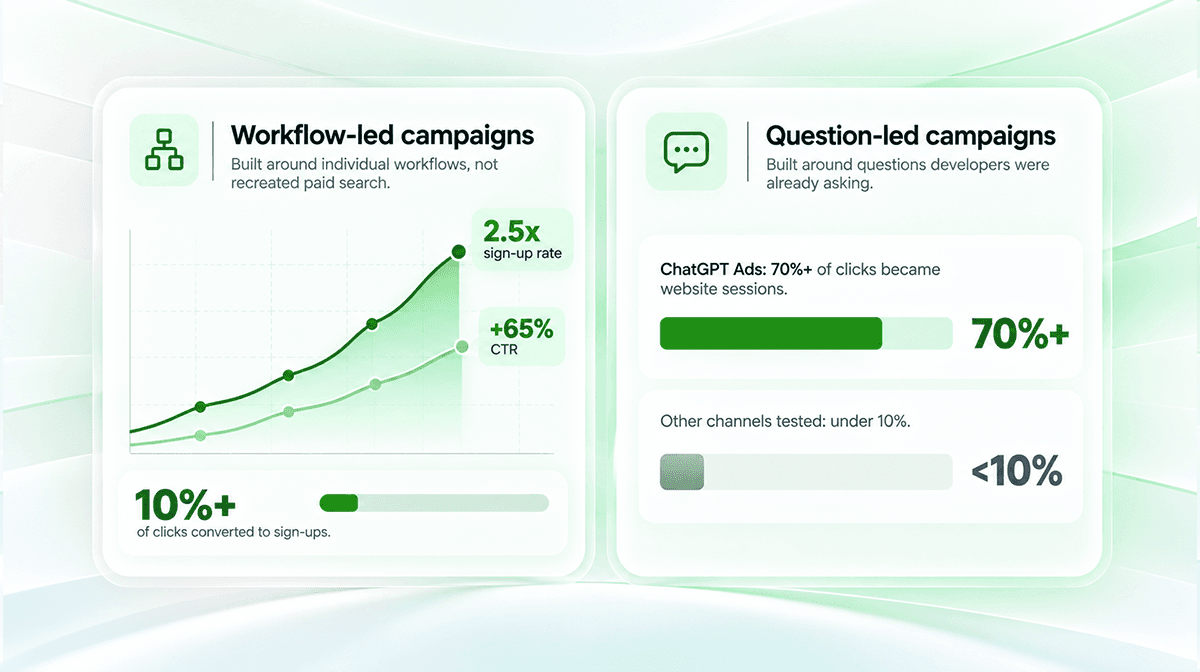
Jotform, for example, has been testing campaigns around individual workflows rather than simply recreating its paid-search setup. During its reported campaign period, improving landing experiences for specific use cases increased sign-up rate 2.5x, while expanding and differentiating its creative improved CTR by 65%. More than 10% of clicks from ChatGPT Ads converted into sign-ups.
Stream took a similar approach with developers, building its campaigns around questions they were already trying to solve, such as adding chat or video capabilities to a product. This positioned the ad as a relevant next step. In its reported test, more than 70% of ChatGPT Ads clicks became website sessions, compared with below 10% across the other channels tested.
The winning idea was not simply "find the right audience." It was to recognise different reasons the product could become relevant and build the message and destination around those reasons.
This creates a new kind of coverage problem
Brands already understand media coverage in terms of reach: how much of the target audience the campaign can access.
Conversational environments introduce another form of coverage.
A brand may reach the right people and still be prepared for only a narrow part of the way those people express demand.
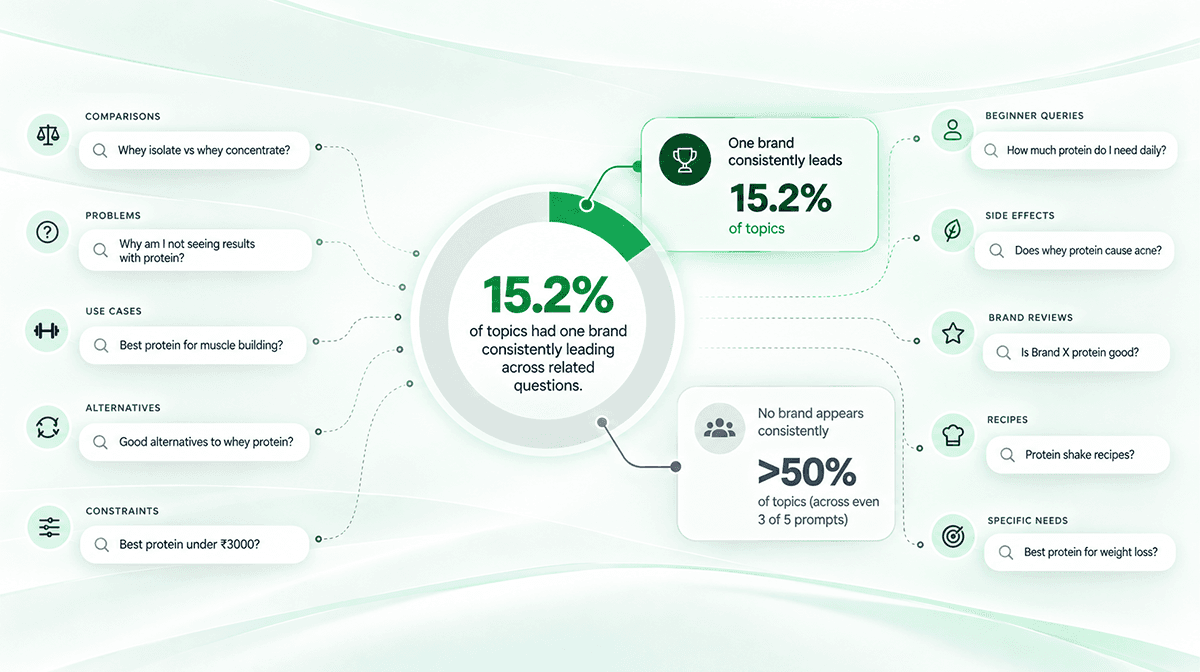
AI discovery research illustrates the problem. A 2026 analysis covering more than 50,000 brands across 1,094 topics found that only 15.2% of topics had one brand consistently leading across the related questions. More than half had no brand appearing consistently across even three of five representative prompts.
That research examined organic AI visibility rather than paid advertising, so the mechanisms are different. But the pattern is useful.
Customers do not explore categories through one standard question. The same need gets expressed through comparisons, problems, use cases, alternatives and constraints.
A brand can therefore appear strongly at one obvious point in the journey and disappear across much of the surrounding conversation.
For conversational advertising, that makes contextual coverage worth thinking about alongside audience coverage.
The question is not how many possible conversations a brand can force itself into. It is whether the brand has understood the meaningful routes through which its product can genuinely become useful.
Contextual coverage starts with the customer, not the ad
This is where the temptation to over-engineer conversational advertising needs to be resisted.
The answer is not hundreds of artificial use cases.
A useful starting point is much simpler: understand what is happening in the customer's world before the product becomes the obvious answer.
What triggers the need? What is the customer trying to accomplish? Which constraint changes the decision? Which part of the product becomes important in that situation? And what proof would make the brand credible there?
Those answers already exist somewhere across customer interviews, search data, sales conversations, product research and campaign performance.
Conversational media makes them more important because they can increasingly become part of the moment in which relevance is decided.
That has implications beyond targeting. A single product may need different creative angles depending on why the customer has arrived. The landing experience may need to continue that particular problem rather than send everyone to the same generic product page. Even the media brief may need to describe the situations in which the brand is useful with greater precision.
Current conversational-ad guidance is already moving in that direction, encouraging advertisers to separate meaningfully different use cases and build distinct messages where the customer need changes.
The opportunity is therefore not simply to generate more ads. It is to build enough relevant routes into the brand.
What this could change next
Conversational advertising is still early, but the direction is becoming easier to see.
Media systems are getting better at understanding not just a standalone query, but the context developing around it. Production research into multi-turn advertising is already using previous dialogue alongside the current request to improve how commercial intent is interpreted.
As that capability develops, the distinction between audience coverage and contextual coverage will become more important for brands.
Audience strategy will still matter. Predictive models will still matter. Search intent will still matter.
But they may increasingly operate alongside a richer understanding of the situations that create demand in the first place.
For brands, that means the work is not finished once the target customer has been defined.
The next layer is understanding the different ways that customer can arrive at the need your product solves and making sure the brand has a credible, useful presence across the routes that matter.
Because in conversational media, demand may not always announce itself with the product name.
Sometimes, it will arrive as the problem that comes before it.



