
Published on
July 30, 2025
The global imperative for sustainability is undeniable. Corporations worldwide are committing to ambitious net-zero targets, and consumers increasingly favor brands that prioritize environmental stewardship
While sustainability efforts intensify across industries, one high-emission sector remains overlooked:
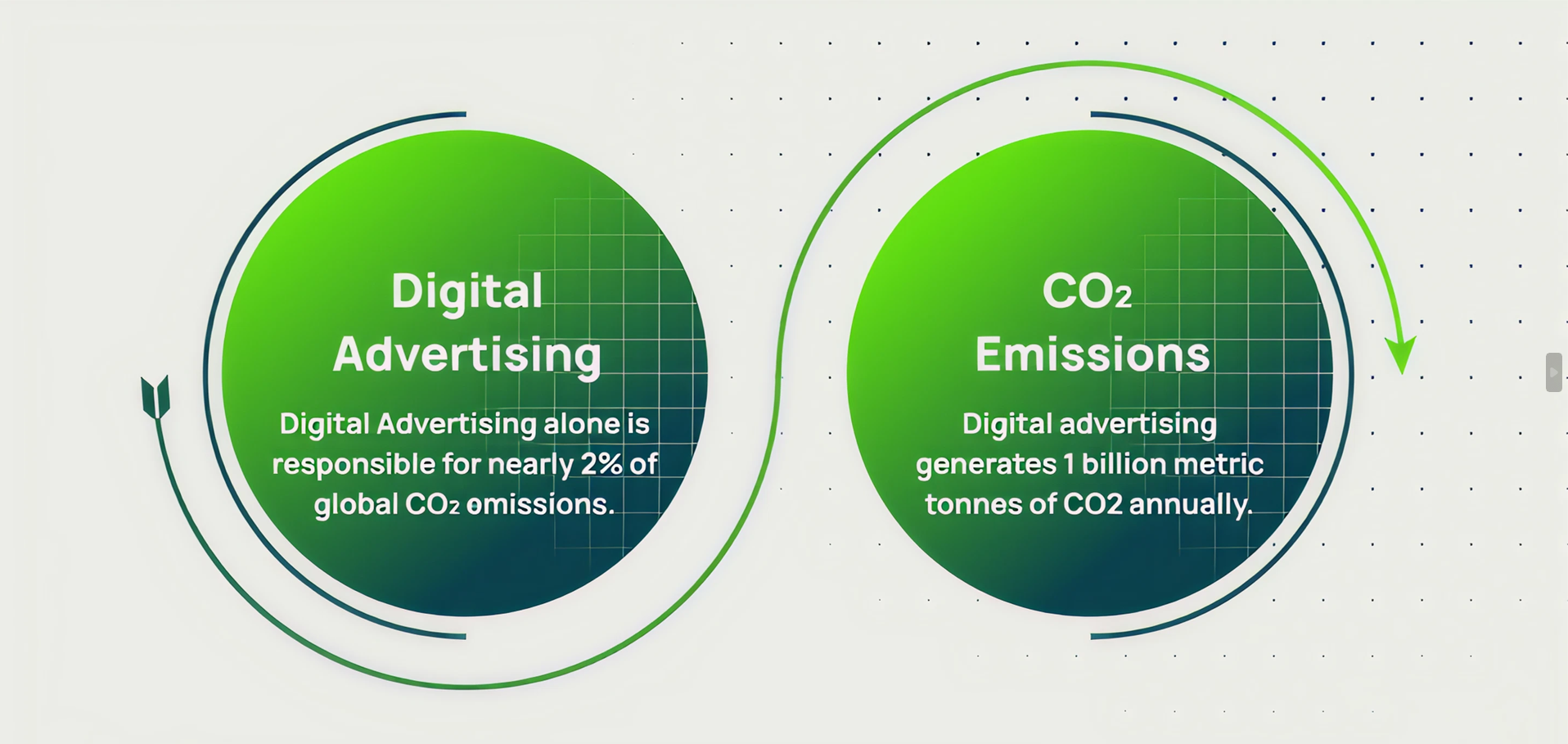
The carbon footprint of digital advertising is an often-overlooked contributor to global GHG emissions. Every ad campaign relies on energyintensive processes powered by massive data centers, significantly impacting the environment. Beyond direct emissions, the industry's largest carbon contributors fall under scope 3 emissions, encompassing indirect sources such as data centers, ad exchanges, content delivery networks, and user devices


*Images and data only for representation purpose.

linked to media-related operations like ad placement, delivery, and targeting.

of a programmatic ad plat-form’s emissions originate from scope 3 activities.
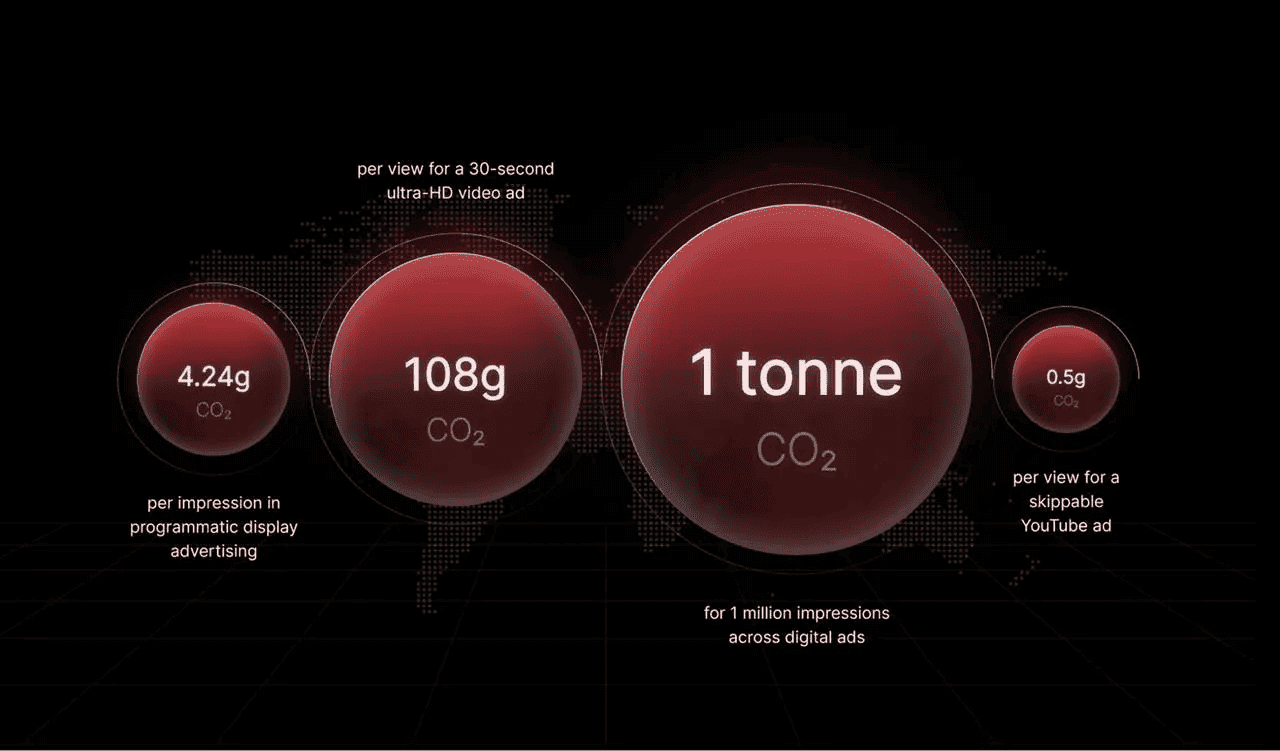
Digital technologies contribute approximately 4% of global GHG emissions , comparable to the aviation industry, and this figure is rising at a concerning rate of 9% annually. Studies indicate that online advertising accounts for 10-20%of internet infrastructure energy use, with 1 million ad impressions generating approximately 1,000 kg of CO2 emissions. Even seemingly small interactions, like a single email, generate approximately 4g of CO₂-equivalent gases.

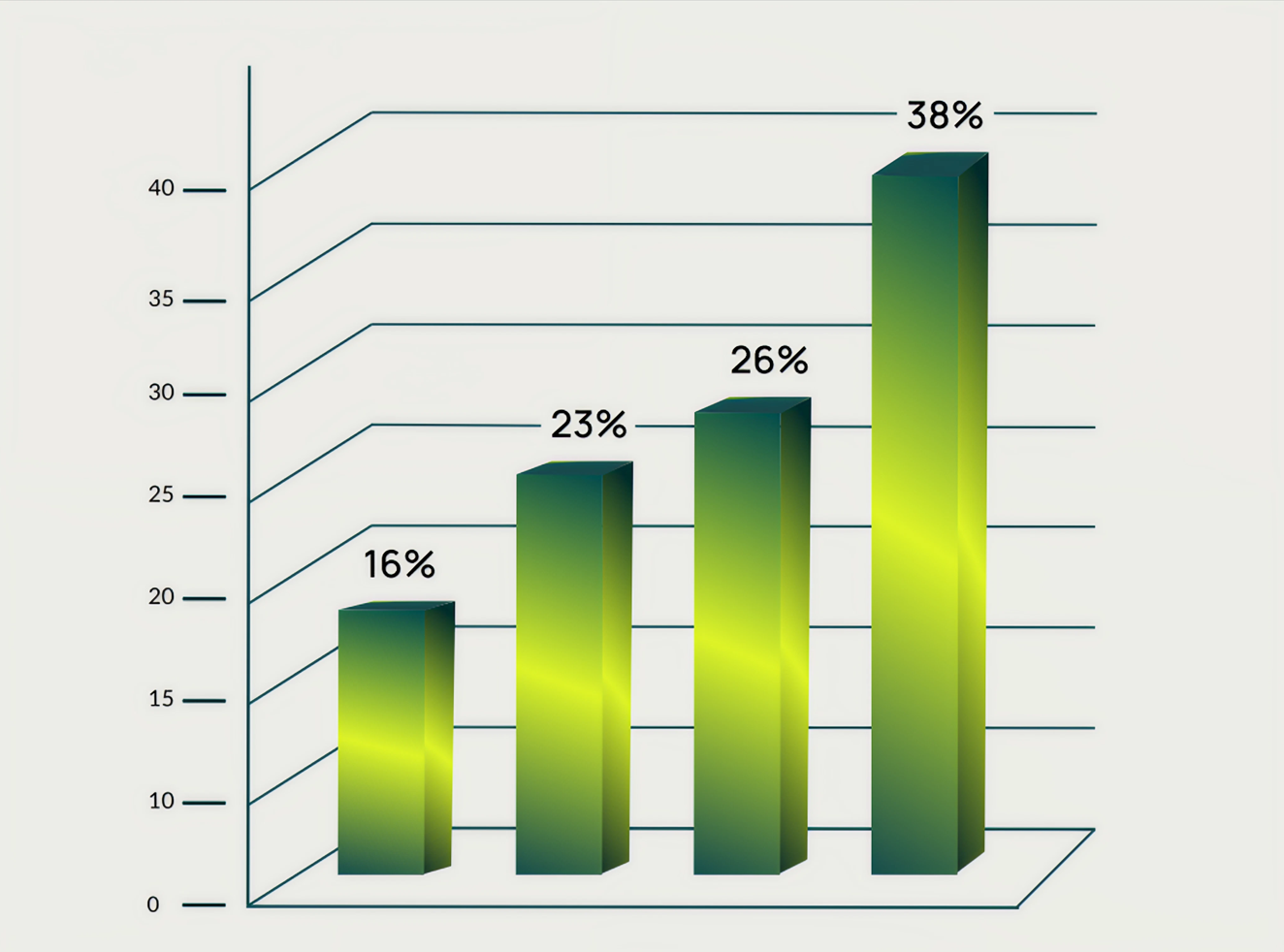
Unlike other sectors with established environmental disclosures, the digital advertising industry has yet to embrace carbon accountability fully, hindering efforts to understand and mitigate its contribution to climate change. According to a survey on “why businesses are not prioritizing greener websites,” 38% of marketers are simply unaware of the environmental impact of their digital footprint.
As the digital advertising industry continues to grow (projected to surpass $1.1 trillion by 2027), the environmental cost of these challenges becomes more evident. Addressing these issues necessitates a fundamental change toward more sustainable and responsible advertising practices.
This whitepaper examines how AI-driven solutions can drive sustainability in digital advertising by reducing emissions, improving targeting efficiency, and enabling low-carbon ad delivery. A clear understanding of the industry's carbon footprint requires analyzing emissions across each stage of the ad lifecycle.
The following section delves into the key contributors to these emisions within digital advertising operations.

While digital advertising eliminates paper waste, it carries a significant yet often overlooked carbon footprint. Every ad impression requires computational power, network bandwidth, and energy-intensive infrastructure, contributing to emissions at multiple stages, from production to delivery and beyond.
A single ad campaign can generate around 70 tons of CO2, the same as the carbon footprint of producing 46 million plastic straws.
These emissions stem not only from digital operations but also from travel, logistics, and office activities that support the advertising industry.
Here's a breakdown of the key phases where these emissions occur:

Every step in digital ad creation contributes to carbon emissions, including filming, editing, high-resolution rendering, and cloud storage.
A single video shoot can produce over 200 tons of CO₂eq, with transportation for location scouting, equipment, and crew making up 80% of emissions.
Delivering and viewing ads and the energy used by data centers and network infrastructure generate continuous emissions.
Data centers, major electricity consumers, could double their consumption to 4% by 2030. Ad distribution relies on content delivery networks and servers that require constant power.

Emissions also come from end-user devices like smartphones, laptops, and smart TVs, which consume energy to load and play ads.

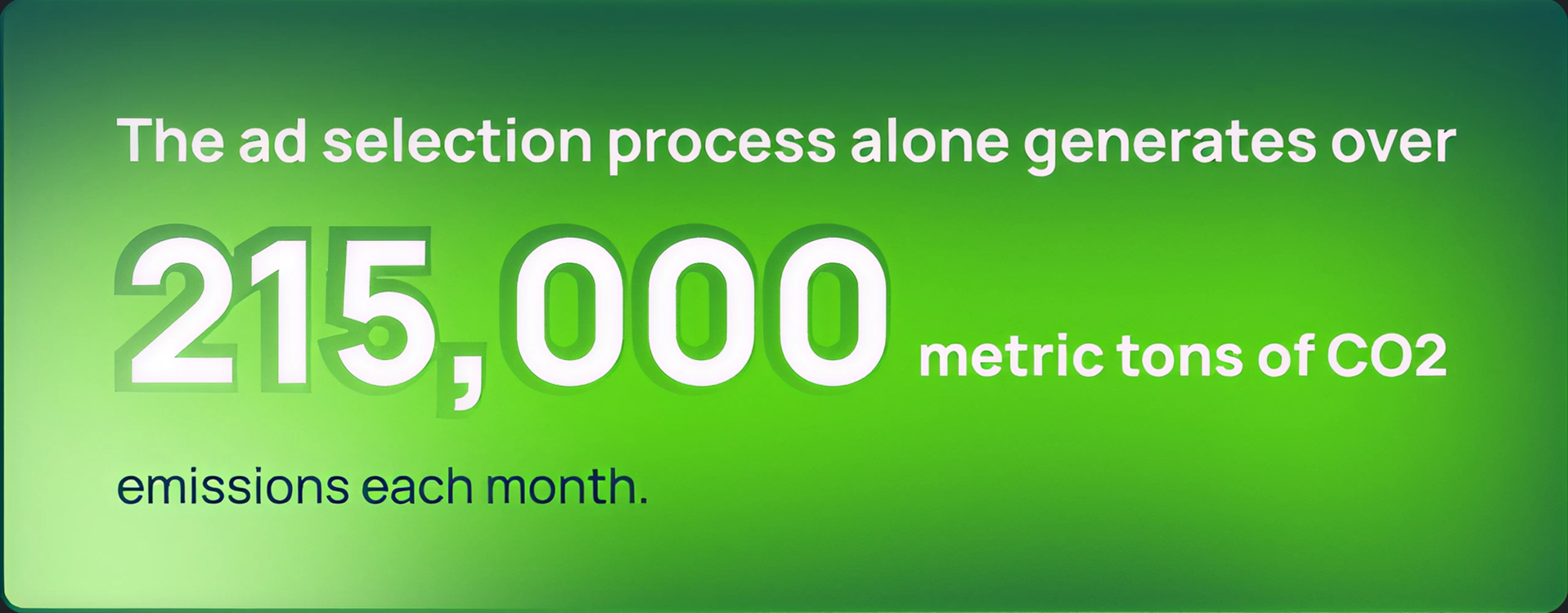
This phase depends on DSPs, SSPs, and DMPs for audience segmentation, running millions of calculations per second, especially for programmatic ads. These processes consume significant energy to support ad auctions and real-time delivery.
Programmatic inefficiencies, such as redundant ad requests and excessive auctions further increase emissions, making this one of the most carbon-intensive stages of digital advertising.

Sustainability in digital advertising is gaining prominence, evolving from a secondary consideration to a critical business priority. Stakeholders across the ecosystem, including brands, agencies, technology providers, and regulators, are now advocating for measurable carbon reduction strategies.
In response to the escalating carbon footprint of digital advertising, numerous global initiatives and industry leaders are adopting proactive measures.

The Advertising Association launched this initiative to achieve carbon-neutral advertising operations by 2030.
It provides a comprehensive five-point action plan, encompassing emission measurement, waste reduction, and the transition to low-carbon ad technology


Unilever, a leading global advertiser, has committed to reducing its media-related carbon footprint by 50% by 2030. To this end, it will leverage AI-driven strategies to minimize ad waste.
Microsoft utilizes AI to measure and mitigate ad emissions, facilitating partners' transition to low-energy ad delivery systems.

Despite these unified efforts, the industry encounters significant challenges in achieving full sustainability.
Governments and regulatory bodies prioritize transparency and accountability requirements concerning digital advertising emissions. Key regulatory shifts include:
Mandates companies to disclose carbon emissions from digital operations, including advertising.
Compels brands and agencies to track Scope 3 emissions from ad infrastructure, supply chains, and third-party vendors.


Enforces greater transparency in digital advertising, requiring platforms to disclose the environmental impact of ad operations.
Large corporations must report their carbon footprints, including digital marketing-related emissions, to investors and stakeholders.

As sustainability regulations become more stringent, brands that fail to measure and reduce their advertising carbon footprint face risks of noncompliance, reputational damage, and financial penalties.

Consumers are increasingly favoring brands with robust sustainability commitments
A study by the IBM Institute for Business Value found that 51% of consumers prioritized environmental sustainability more than a year ago.
About 68% of consumers are committed to environmental sustainability, indicating a strong preference for brands that align with these values.

Beyond consumer sentiment, stakeholders are pushing for greater transparency in the ad industry’s environmental impact

ESG-focused investment funds are demanding transparency on carbon emissions from digital ad supply chains. A study by EY Luxembourg highlighted that 58% of analyzed corporate studies showed a positive relationship between ESG and financial performance, indicating that ESG considerations are becoming integral to investment strategies.
Agencies failing to integrate sustainability KPIs into their media planning risk losing major accounts as brands increasingly prioritize partnerships emphasizing greener practices.
Despite initiatives like Ad Net Zero and the IAB Europe’s Sustainability Standards Committee, a significant gap exists between intentions and implementation in brand marketing, with only 37% of global marketers viewing sustainability as a core responsibility and 51% unable to measure emissions from digital ad delivery. Challenges such as fragmented data, lack of standardized measurement frameworks, and competing business priorities hinder progress, while many organizations lack the technological infrastructure for effective tracking and reporting
The digital advertising industry is undergoing a transformative shift as artificial intelligence (AI) emerges as a powerful tool for reducing carbon emissions while enhancing campaign effectiveness. By integrating AI into various advertising workflows, brands are finding innovative ways to minimize their environmental impact and align with global sustainability goals. Here’s how AI is driving a greener future for digital advertising

AI-powered carbon tracking tools provide real-time insights into emissions at every stage of an ad’s lifecycle, from content creation to user interaction.
By enhancing audience targeting, choosing specific websites where ads are being run and prioritizing energy-efficient networks, AI helps brands cut their carbon footprint by 15% to 30%.
AI also enhances predictive carbon modeling, allowing companies to anticipate the environmental impact of different ad strategies and adjust accordingly
AI tools from sustainable marketing platforms help advertisers monitor campaign emissions, offering a comprehensive view of the carbon intensity of their media buys. For instance, Climaty AI uses proprietary technology and advanced algorithms to calculate campaign emissions using parameters like video spot length, targeted countries, and other details to calculate total emissions.

Digital advertising depends on extensive server networks, with data centers consuming a growing share of global electricity. To reduce this impact, brands are adopting AI powered green hosting solutions that dynamically allocate workloads based on energy availability.
AI helps manage server efficiency by reducing redundant processing, balancing loads across renewable powered data centers, and selecting low-carbon pathways for content delivery.
Power Purchase Agreements (PPAs). also enable advertisers to source clean energy directly from renewable sources like solar and wind, ensuring long-term sustainability.
AI-driven content delivery network (CDN) optimizations further cut energy use by minimizing data transfer inefficiencies and reducing the number of unnecessary server requests.

AI-driven ad placement ensures that advertisements reach the right audience on the most relevant platform at the right time. By analyzing historical data and real-time insights, AI predicts consumer behavior trends and dynamically adjusts campaigns to maximize effectiveness.
Contextual targeting, powered by natural language processing (NLP), aligns ads with web page content and user interests, enhancing relevance. Predictive analytics further refine targeting strategies based on evolving market conditions, ensuring sustained campaign performance.

Machine learning and blockchain are reshaping digital advertising by improving efficiency and transparency. AI-driven real-time bidding (RTB) systems reduce computational overhead by streamlining auction processes, ensuring that only the most relevant impressions are bid on. These mechanisms minimize wasted ad spend and lower energy consumption in programmatic advertising. Blockchain enhances transparency in sustainability efforts by tracking carbon emissions across the advertising supply chain, according to Forbes. AI automates sustainability audits, verifies carbon reduction claims, and detects inefficiencies in media buys

AI-powered ad delivery can reduce carbon emissions by up to 500kg per campaign, demonstrating the effectiveness of precision targeting in minimizing environmental impact. As we look ahead, technology plays an even more critical role in addressing digital advertising's carbon challenge.
Rather than merely reducing emissions, the right technological solutions can eliminate inefficiencies, drive transparency, and prioritize measurable impact throughout the ad ecosystem.
Machine learning and blockchain are reshaping digital advertising by improving efficiency and transparency. AI-driven real-time bidding (RTB) systems reduce computational overhead by streamlining auction processes, ensuring that only the most relevant impressions are bid on. These mechanisms minimize wasted ad spend and lower energy consumption in programmatic advertising. Blockchain enhances transparency in sustainability efforts by tracking carbon emissions across the advertising supply chain, according to Forbes. AI automates sustainability audits, verifies carbon reduction claims, and detects inefficiencies in media buys
However, this potential is often hindered by the fragmented landscape of current sustainability solutions. While numerous platforms address discrete aspects of sustainability: carbon measurement, campaign optimization, or emissions offsetting, their isolated functionality presents a challenge to brands seeking a cohesive and accountable sustainability strategy

Current solutions offer valuable contributions at various stages of the advertising lifecycle. Platforms such as Scope3 and Cedara provide critical emissions measurement, enabling advertisers to quantify their environmental impact. Conversely, platforms like Scibids, Pixis, and Sprinklr specialize in AI driven campaign optimization, enhancing performance through automated bidding and strategic planning. Further, solutions like Sharethrough, Greenbids, and Good-Loop incorporate programmatic strategies to integrate sustainability considerations into media strategies, promoting low-carbon alternatives.
While each platform serves a distinct purpose, managing multiple tools complicates the implementation of a comprehensive sustainability program.

Climaty AI establishes itself as a one-stop platform for sustainable advertising, offering a comprehensive, end-to-end solution that integrates measurement, optimization, and offsetting in a unified ecosystem
Track the carbon cost of every impression.
Cut emissions while boosting ROAS.
Zero out the rest.
With tools to measure, optimize, and offset carbon emissions across the entire advertising lifecycle, Climaty AI drives tangible, lasting environmental change that makes the media industry truly sustainable.
With Climaty AI, there’s no compromise between performance and sustainability. The platform ensures businesses achieve sustainability objectives while enhancing operational efficiency and campaign performance
Decarbonizing digital advertising is not just a technical challenge but an industry-wide necessity.
As highlighted in this whitepaper, the environmental impact of digital advertising extends across the entire ecosystem. AI presents a critical opportunity to mitigate this footprint while improving efficiency and ad performance.
Beyond technological advancements, achieving true sustainability requires collective action. Marketers must integrate sustainability metrics into media planning, prioritize carbon-conscious ad delivery, and align with evolving regulations. As consumer demand for sustainable practices grows, businesses that embrace AI-driven solutions will be better positioned for long-term success.

As regulations grow stricter and market expectations shift, sustainable digital advertising becomes a shared responsibility. AI provides the tools to meet these demands while prompting us to consider the broader impact of our work. Technology must go beyond driving growth; it should contribute to the planet’s well-being.
By adopting AI-driven solutions, we can build an advertising ecosystem that balances campaign performance with environmental care. Prioritizing sustainability alongside profitability will define success not just by revenue, but by the positive change we create


