
The Shift From Media Buying to Media Engineering
Published on
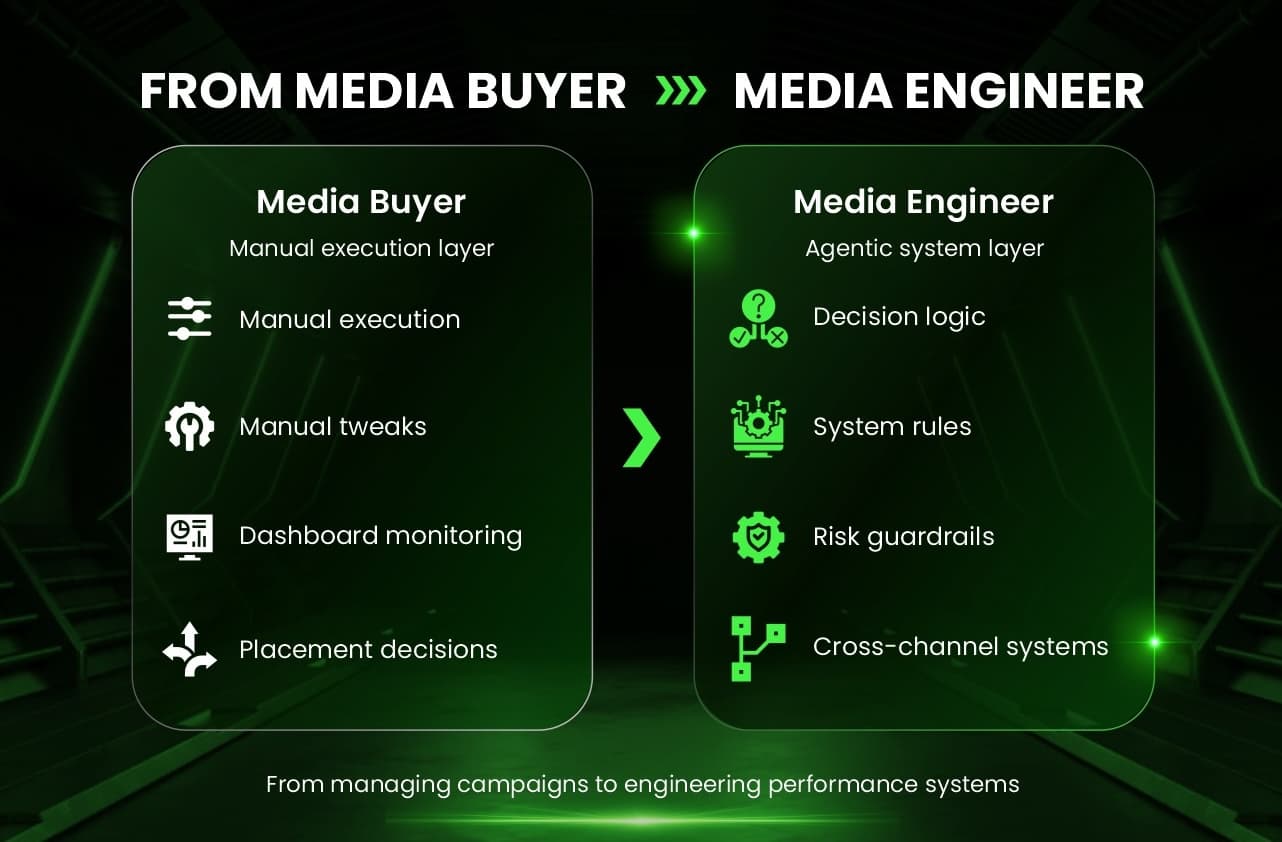
Media buyers used to manage placements. Media engineers design systems.
For years, “great buying” meant knowing the platform controls: which levers to pull, when to pull them, and how fast to react when performance drifted. That skill still matters. But it is no longer the job’s center of gravity. Execution is increasingly automated, and the work that stays valuable is the part that machines cannot guess: intent, trade-offs, boundaries, and how the whole system should behave.
1) Why It Matters
Automation is not just about accelerating tasks. It is reshaping responsibility. Major platforms are already moving toward agentic AI, introducing systems that can autonomously manage and optimize marketing workflows with less manual input.
That shift captures an important tension. If systems are doing more of the work, then humans are accountable for what those systems do. Reliability cannot come from faster clicking. It comes from designing decision logic that holds up under volatility, fatigue, and shifting auctions.
This is also why governance is moving from a “nice to have” to a requirement. As many industry observers note, companies need clearer AI adoption plans and stronger governance to keep pace with AI’s rapid evolution. When execution is continuous, guardrails must be continuous too.
2) The Operator Trap
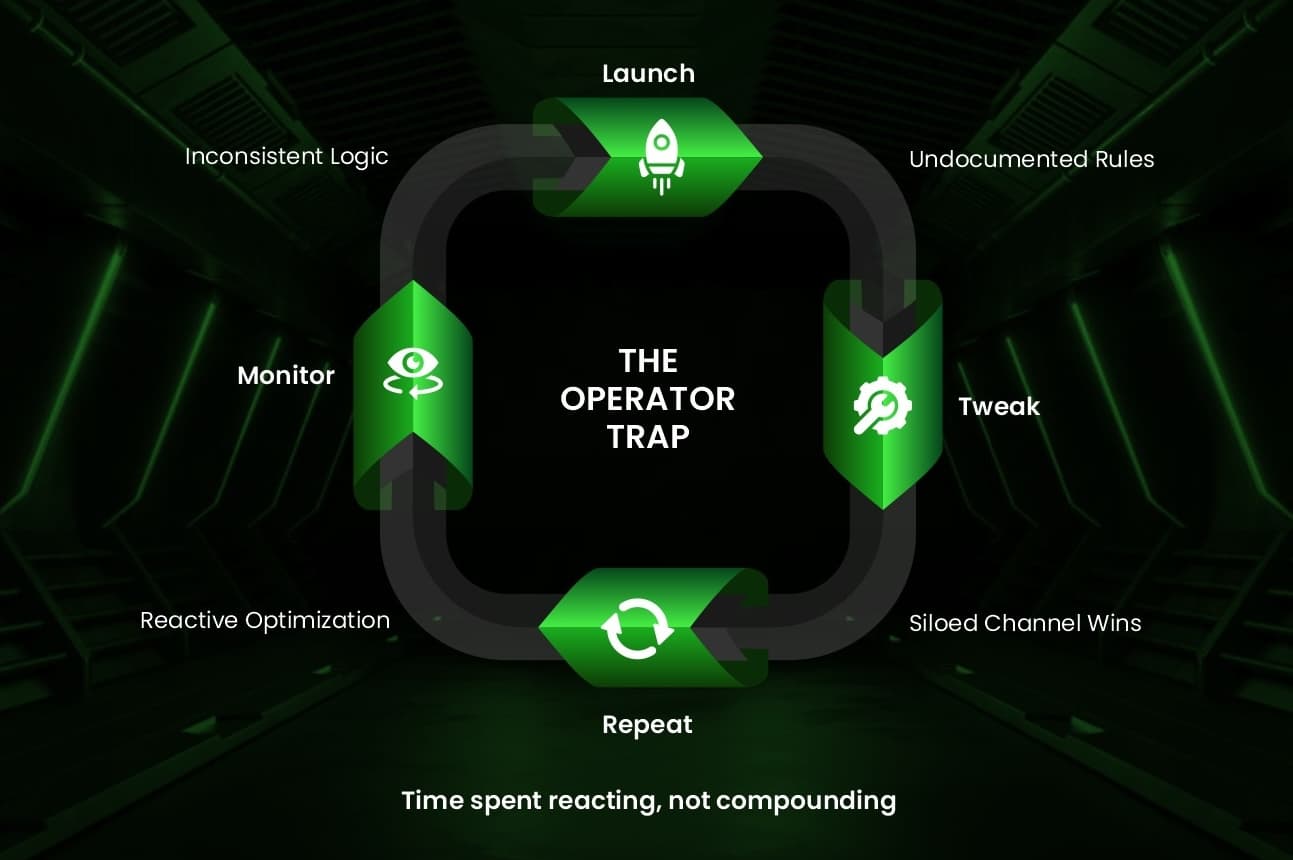
Most teams are still working in a rhythm built for manual control:
Launch. Monitor. Tweak. Report. Repeat.
It feels productive because there is always something to do. But it creates a hidden tax. The team spends its best time on repetitive adjustments instead of building a system that learns.
Signs you are stuck in operator mode:
- Optimizations are mostly reactive to dashboards, not planned from a model
- “What changed?” takes hours because data, naming, and logic are inconsistent
- Budget moves are debated weekly, but rules are never written down
- Performance wins do not translate across channels because each channel is optimized in isolation
- Creative refresh is triggered by panic after decline, not by designed cycles
The operator trap is not a skills problem. It is a structural problem.
3) What Media Engineering Actually Means
Media engineering is the shift from tactical execution to structural design.
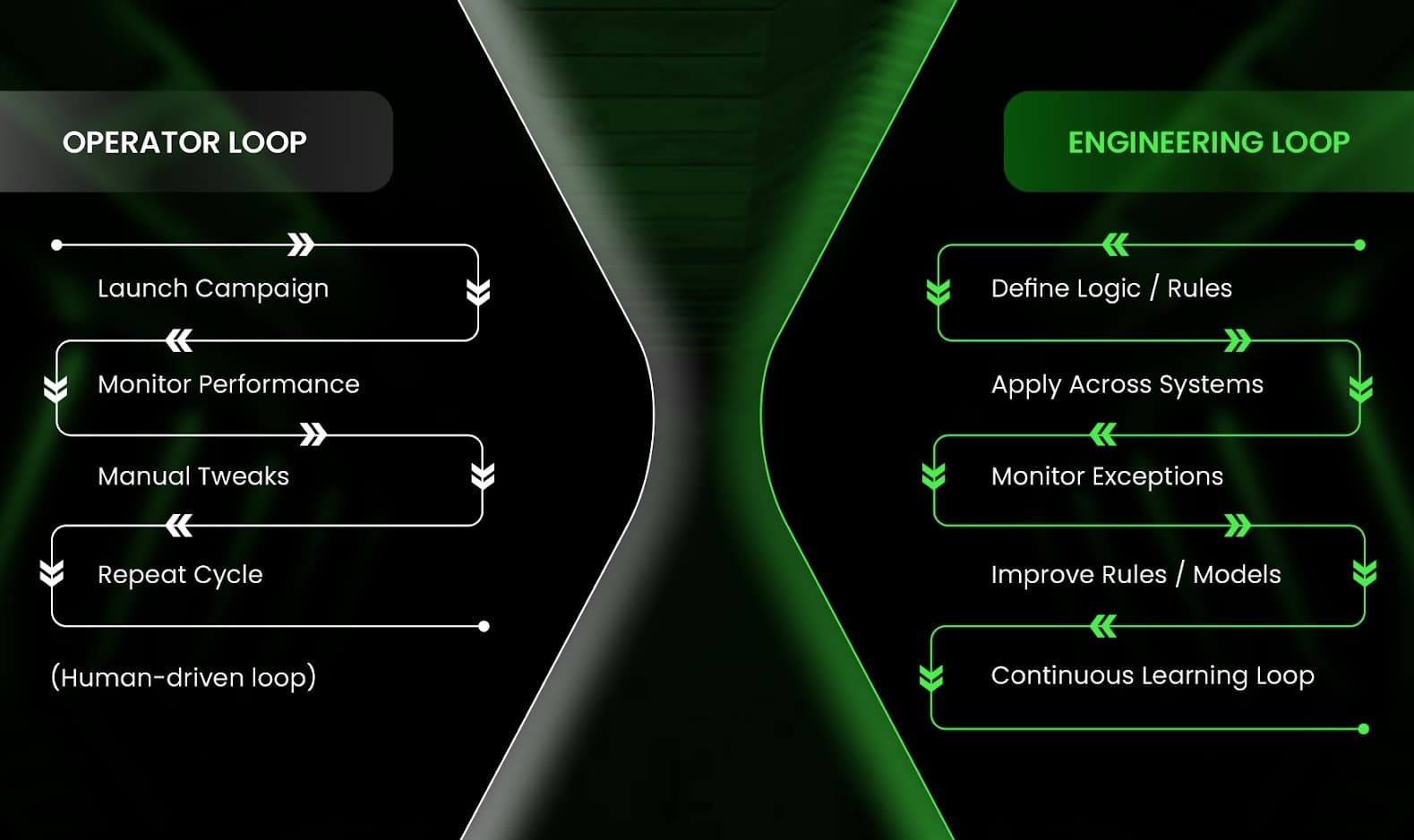
Instead of optimizing campaign-by-campaign, you encode performance logic once and let it apply consistently across campaigns and channels. Humans shift toward architecture and oversight: setting the objective hierarchy, defining acceptable risk, choosing how budget moves, and ensuring the system remains aligned with brand and business intent.
MIT Sloan captures the broader movement: “These systems don’t just assist employees and automate isolated tasks; they pursue goals, coordinate across workflows, and adapt based on outcomes.” If systems can coordinate and adapt, then your job is to define the goals, the constraints, and the escalation paths.
Media buying is not disappearing. The work is moving upstream.
Visual suggestion: a simple flow that shows “Operator loop” (launch, monitor, tweak) vs “Engineering loop” (define logic, apply, monitor exceptions, improve rules).
4) The Four Building Blocks
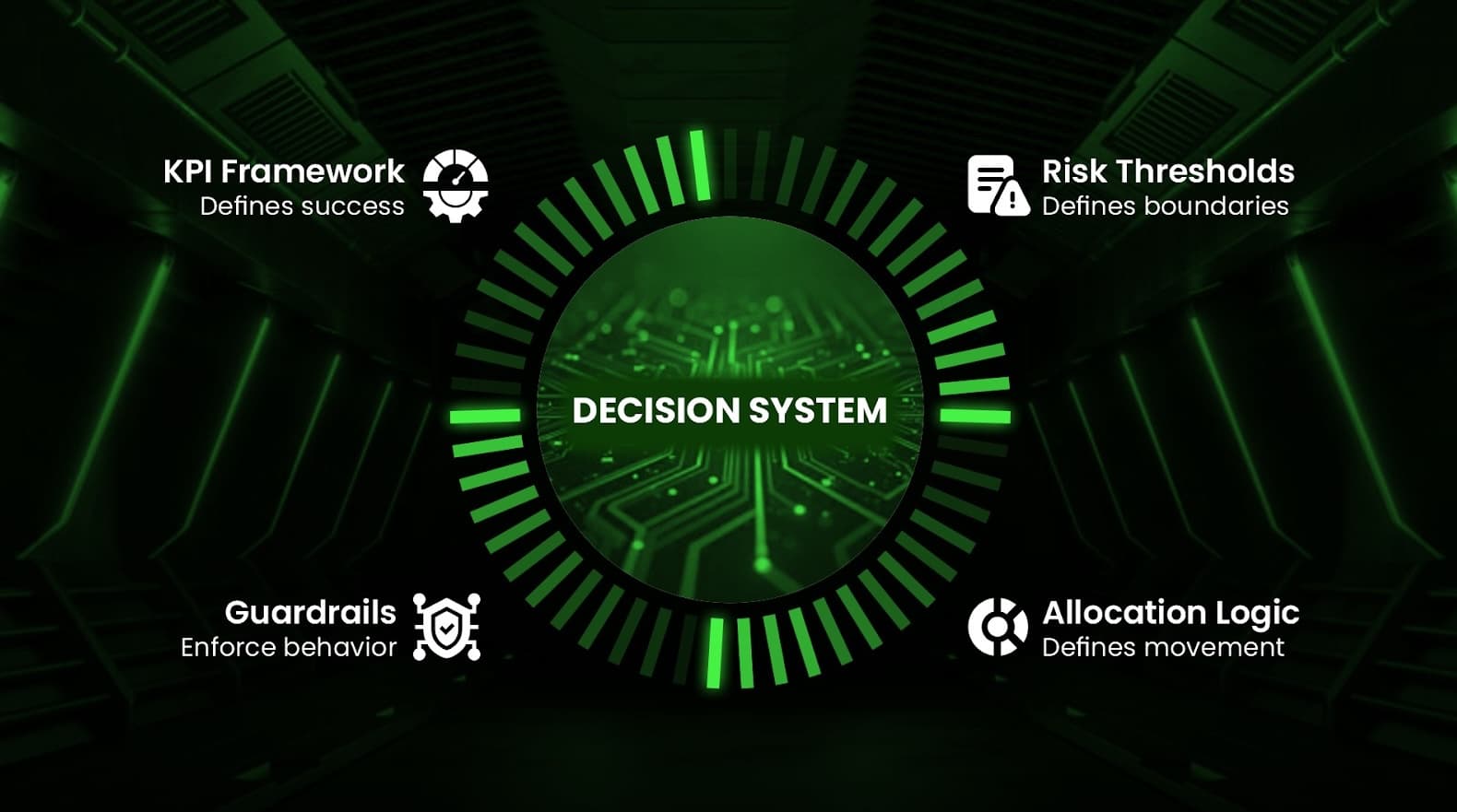
KPI frameworks
Teams move from chasing isolated metrics to defining a KPI hierarchy: primary goal, supporting metrics, trade-offs, and time horizon. Automation optimizes best when “success” is unambiguous; if the hierarchy is unclear, the system will optimize one metric while the business judges another.
Risk thresholds
Risk is defined upfront instead of managed through constant monitoring. This includes limits like acceptable CPA drift, frequency ceilings, spend volatility bands, and fatigue triggers. Clear boundaries make automation scalable; without them, teams either override constantly or lose control.
Allocation logic
Budget movement becomes a designed rule-set: when to reallocate, how much, across which channels, and how to balance stability vs experimentation. A reallocation model prevents whiplash and turns budget shifts into compounding efficiency rather than weekly guesswork.
Guardrail configuration
Constraints are made explicit: brand safety rules, exclusions, performance floors, and escalation triggers. Guardrails ensure performance gains stay aligned with brand intent and long-term outcomes, not just short-term platform metrics.
Visual suggestion:
5) How the Day-to-Day Work Actually Shifts
When engineering replaces operating, daily work changes in subtle but decisive ways.
There are fewer repetitive adjustments because systems apply the rules continuously. There is more time spent designing decision logic that prevents problems from appearing in the first place. Creative and media move into tighter loops, because the system makes it easier to see what is fatiguing, what is holding, and what needs to change next.
You also get fewer “mystery swings.” Because when KPI definitions, risk thresholds, and allocation logic are explicit, diagnosis becomes faster and debate becomes shorter. The team spends less time interpreting noise and more time steering outcomes.
Prevention replaces fixing.
6) Climaty AI: Media Engineering in Practice
At Climaty AI, we see this shift as an operating model change, not a tooling upgrade. That is why the platform is built as a coordinated system, not a collection of isolated features. A synchronized network of autonomous agents works across planning, creation, optimization, analytics, and governance, helping teams move from manual intervention to structured control.
In practice, that is what media engineering looks like:
- KPI frameworks stay consistent because the system keeps objective hierarchy aligned across channels, instead of letting success get redefined in every dashboard or platform view.
- Risk thresholds become visible earlier because drift, frequency creep, and creative fatigue are surfaced before they turn into wasted spend.
- Allocation logic gets more disciplined because signals are evaluated across the portfolio, reducing isolated channel wins that do not hold up at the business level.
- Guardrails become part of execution because approvals, escalation paths, and boundaries live inside the workflow, not in scattered docs or team memory.
The bigger shift is maturity. Media engineering is how teams move from fragmented automation to a coordinated system that scales performance with more control
7) Takeaway
Do not optimize harder. Architect better.
The advantage is shifting from who works the fastest to who designs the most reliable system. Teams that encode logic, boundaries, and feedback loops into their workflow will compound learning without constantly resetting. Teams that stay in operator mode will keep reacting to noise, even as automation increases around them.
Media buying is evolving into media engineering. The teams that treat it like system design will be the ones who scale performance with control.



