
The Creative Fatigue Problem: Why It Hit Harder Than Ever in 2025
Published on
Summary
If you ran paid media through 2025, you probably noticed something strange. Campaigns didn’t fail loudly. They didn’t collapse overnight. Instead, they quietly stopped improving.
CTRs softened.
CPCs edged upward.
ROAS flattened earlier than expected.
Nothing looked broken, but nothing scaled the way it used to.
What 2025 exposed wasn’t a flaw in performance marketing.
It exposed a flaw in how quickly teams could respond to creative decay.
And that mattered because, by now, we know creative isn’t a secondary lever. A large meta-analysis by Circana showed that ~49% of incremental sales impact is driven by creative, outweighing targeting, bidding, and channel mix combined.
So when creatives started wearing out faster than teams could replace it, performance didn’t just slow down. It stalled.
Why Creative Fatigue Hit Pefrormance Marketing Harder in 2025
Creative fatigue wasn’t new in 2025. What was new was how unforgiving the system became.
By the end of the year, three forces had converged, and together, they reshaped performance outcomes.
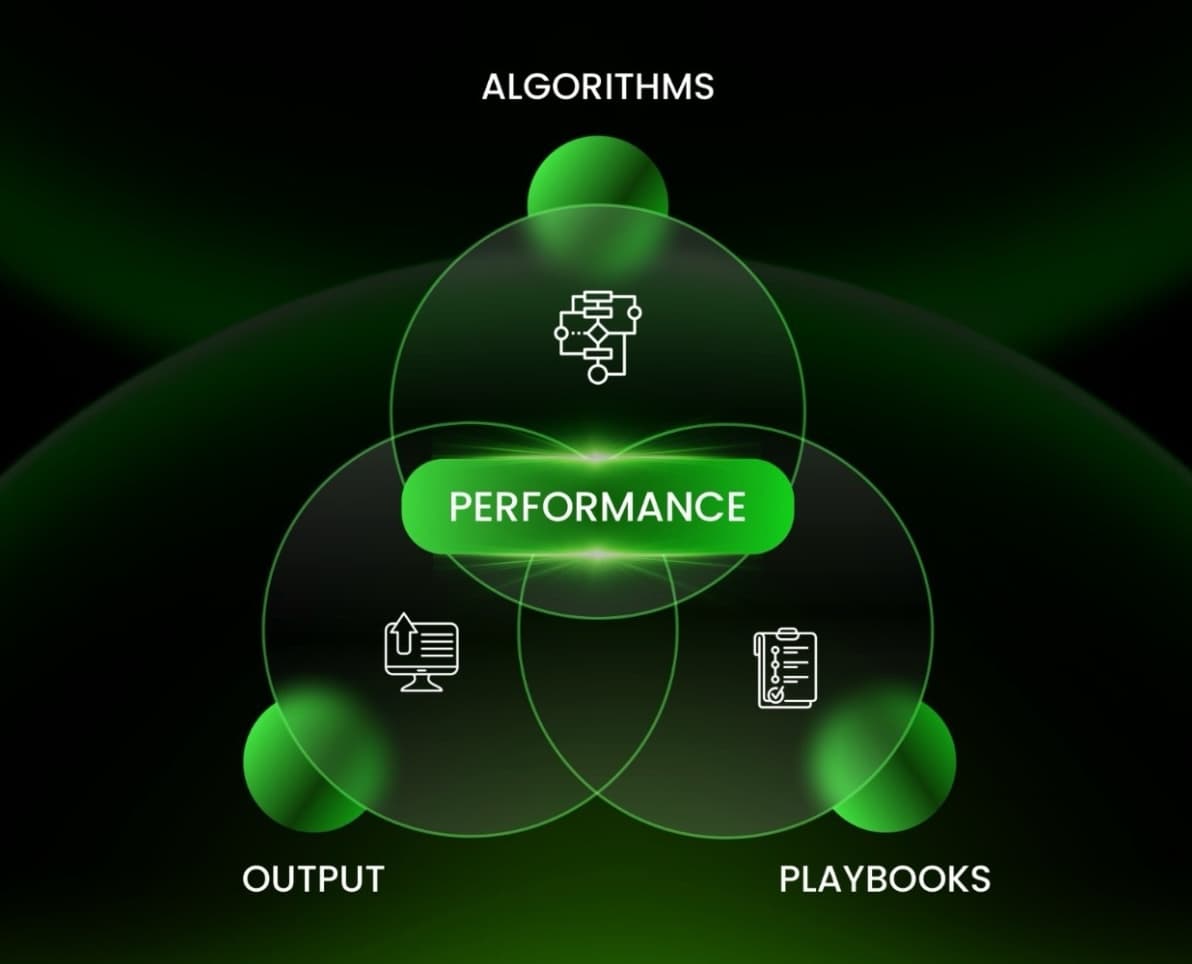
1. Algorithms learned faster than creative teams could iterate
In 2025, ad platforms didn’t need weeks to “figure out” a creative. They learned quickly, and deprioritized just as fast.
Meta’s internal analysis showed that once a user had seen the same creative around four times, the likelihood of conversion dropped by ~45%, even when targeting, bids, and budgets stayed unchanged.
2. Output exploded but differentiation didn’t
2025 was also the year GenAI moved from experimentation to execution.
According to the IAB, nearly 50% of advertisers were already using GenAI to build video ads, with adoption accelerating rapidly across performance teams.
On paper, this looked like an advantage.
In practice, it created a new problem: volume increased faster than originality.
More assets were shipped.
More variants were tested.
But many of them communicated the same promise, the same proof, the same framing, just dressed differently.
Algorithms don’t care about file names or aspect ratios. They care about repeated ideas.
3. Performance creative converged on the same playbooks
UGC-style hooks.
Testimonials.
Native edits.
Fast cuts.
These formats worked, so everyone used them.
And once everyone used them, distinctiveness collapsed.
Creative fatigue in 2025 wasn’t caused by short-form platforms. It was caused by performance marketing optimizing itself into sameness.
What Creative Fatigue Actually Looked Like in Performance Data
Looking back at 2025, the warning signs were everywhere, just rarely in isolation.
Creative fatigue didn’t show up as a single red alert. It showed up as small, compounding inefficiencies across the funnel.
Performance teams started noticing patterns like:
- Gradual CTR decline on previously “winning” creatives
- CPC and CPA creeping upward without audience expansion
- Conversion rate softness tied to specific creatives, not ad sets
- Performance recovering only after creative swaps, not bid or budget changes
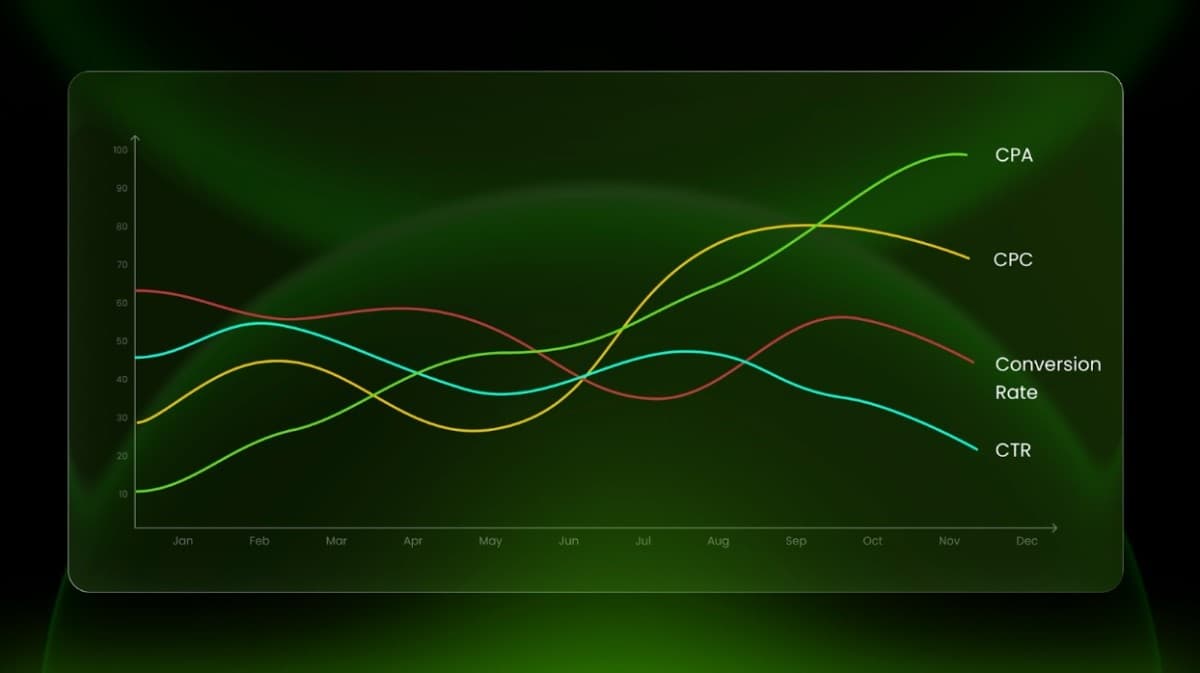
Meta’s data explains why this became structural.
In other words, most campaigns were operating in fatigue conditions by default.
More importantly, Meta found that in high-fatigue scenarios, introducing fresh creative improved conversion rates by ~8%, even when targeting and bids remained unchanged.
When performance rebounds without touching media levers, the diagnosis is clear: the bottleneck was creative decay.
Why Creative Iteration Pipelines Failed Performance Teams in 2025
If fatigue was so widespread, why weren’t teams ahead of it?
Because most creative pipelines weren’t built for algorithmic speed.
1. Iteration was reactive, not predictive
Creative was typically replaced after performance dropped.
By then, the opportunity cost had already compounded.
Fatigue needs to be anticipated, not investigated after the fact.
2. Feedback loops were too slow for modern media
Insights had to travel from:
dashboard → analyst → brief → creative → approvals → launch
By the time new assets went live, the algorithm had already deprioritized the old idea.
3. Measurement didn’t isolate creative decay early enough
Nielsen’s 2025 Annual Marketing Report showed that only 32% of marketers measured performance holistically across channels, making creative-level diagnosis even harder.
Without clear creative intelligence, teams defaulted to guesswork.
4. AI improved speed, but not understanding
McKinsey reported that 88% of organizations used AI in at least one business function by the end of 2025.
But most marketing applications focused on production efficiency, not performance learning.
Teams got faster at shipping ads but not faster at understanding why ads stopped working.
What performance marketers must do differently in 2026
If 2025 proved anything, it’s this: creative fatigue is no longer an edge case.
It’s the baseline.
1. Treat creative decay as forecastable
Creative fatigue follows a pattern, not a surprise event.
Platform data shows that average exposure levels already cross four impressions per user per creative in many scaled campaigns. Once this threshold is reached, performance decline becomes increasingly likely unless creative is refreshed or meaningfully differentiated.
For performance teams, this means:
- Planning creative rotation alongside budget allocation
- Defining expected “useful life” windows for high-spend creatives
- Monitoring performance at the creative level, not just the ad set or campaign level
Fatigue should be forecasted and managed the same way frequency or diminishing returns are.
2. Optimize for distinctness, not novelty
Creative refresh does not automatically mean creative improvement.
Swapping visuals, formats, or edit styles while keeping the same underlying message often delays fatigue rather than prevents it. Algorithms still detect repetition at the idea level.
A more effective approach is to rotate:
- Value propositions
- Proof points
- Framing and narrative angles
- Primary audience motivations
Distinct concepts extend performance life more reliably than repeated executional variations of the same idea.
3. Shorten creative learning loops
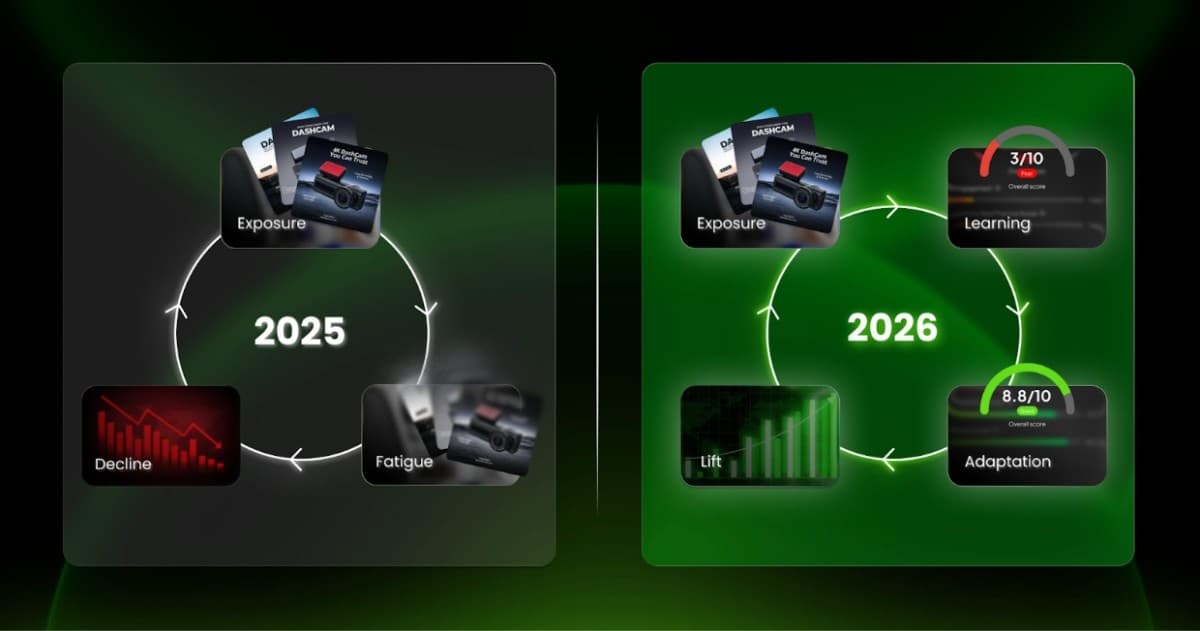
In 2026, performance advantage will increasingly come from response speed, not production volume.
Teams that reduce the time between:
performance signal → insight → new concept live
will be better positioned to counter fatigue before it compounds.
This requires:
- Faster insight synthesis
- Clear decision ownership
- Creative workflows designed for iteration, not campaigns
The goal isn’t to ship more assets; it’s to adapt more intelligently.
4. Use AI to increase intelligence, not just output
As generative tools become widely accessible, production speed alone will no longer be a differentiator.
The real opportunity lies in using AI to:
- Identify which creative elements are driving decline
- Surface patterns across high- and low-performing concepts
- Guide what should be tested next, not just what can be produced
In a landscape where many teams can generate ads quickly, learning velocity and decision quality will determine sustained performance.
Creative Velocity is the New Media Multiplier
2025 defined the real leverage in performance marketing.
Targeting is noisier than it used to be.
Auctions are denser.
Measurement is harder.
But one advantage still compounds: how fast teams learn from creative performance, and how fast they act on it.
If creative drives nearly half of incremental performance impact, then creative velocity is no longer a branding concept. It’s a media multiplier.
2026 won’t reward the teams that produce the most ads.
It will reward the teams that learn the fastest from the ones that stop working.



