
The $19.8 Billion Dilemma: Why MENA’s Digital Ad Industry Growth Must Go Green

Published on
Summary
Digital advertising in MENA is growing rapidly, with brands spending up to 76 percent of their budgets online. The UAE’s Net Zero Strategy and global frameworks like Ad Net Zero are shaping new standards for sustainable media. At the same time, consumers are demanding accountability, with younger audiences favoring brands that show measurable climate action. The blog explores how MENA’s media landscape is evolving. It looks at emerging clean media initiatives, growing regulatory momentum, and the urgent need for integrated, end-to-end solutions that combine campaign performance with carbon accountability.
The MENA Digital Advertising Surge and Its Sustainability Conundrum
The advertising market in the Middle East and North Africa (MENA) has grown tremendously and is expected to advance even further. With companies spending as much as 76%of their total budgets through digital channels, this market is emerging as a prime mover of economic growth. Beneath this rapid acceleration of social media and programmatic advertising, a deep-rooted problem is often overlooked: how does digital advertising take a heavy toll on the environment?
Each form of digital media outreach effort uses resources and energy, adding to a growing carbon footprint that marketers are beginning to realize. As sustainability gains greater global precedence than ever before, the MENA advertising industry confronts a crucial question: Can it maintain its commendable growth while adopting carbon-conscious practices?
The future of digital advertising in this market is at a crossroads as governments and industry leaders advocate for net-zero initiatives. These initiatives are a wake-up call for this sector, which is undergoing rapid growth and begs for environmental responsibility to go hand in hand.
Unseen Yet Unavoidable: The Environmental Implications of the Digital Ad Industry
Modern-day digital connectivity and convenience often bear an inherent cost when discussing sustainability. Online media activities consume massive amounts of energy and release emissions that fuel a growing carbon footprint identical to that of the world's most pollutant-heavy industries.
This footprint is expected to swell as digital media consumption continues its relentless rise, especially in high-adoption regions like MENA. As more brands direct their marketing spend toward digital platforms, the need for sustainable marketing strategies is on the rise.
The energy-intensive infrastructure that supports digital advertising is also at the core of the problem. Data centers, ad exchanges, and content delivery networks that operate 24/7 add to the carbon-heavy operations.
The environmental impact of these technologies increases with their scale - emissions that rise with each millisecond of media operations. It is crucial to reconsider and redesign the digital ad infrastructures for a decarbonized future, as the absence of timely intervention could undermine sustainability efforts.
The MENA Ad Industry Needs a Decarbonization Strategy.
Create one that delivers high-performance and sustainability
Government & Industry Initiatives Promoting MENA Sustainable Digital Advertising Mandate
MENA governments are making noteworthy efforts to incorporate sustainability into their national policies, which align with the pressing concerns on climate change. Industry-led, government-supported programs are helping establish operational and regulatory frameworks that include top-down changes and cross-sector partnerships.
UAE's Net Zero by 2050 Initiative
As a renowned regional leader in environmental innovation, the UAE is leading this transition to sustainable practices.
This policy acts as an exemplary standard for the advertising industry, supported by investments in decarbonized infrastructure, cross-sector net-zero initiatives, and a focus on private-sector alignment.
It emphasizes that CO2 emissions are now an alarming concern that must be addressed across all sectors of the economy. Furthermore, it advocates alignment with agencies, publishers, and brand marketers to showcase their carbon accountability.
Ad Net Zero
This global industry movement aims to minimize media operations' carbon footprint and supports government-led initiatives. In 2023, Ad Net Zero introduced the first-ever Media Sustainability Framework, equipping advertisers with the instruments and standards they need to track, document, and slash emissions across the advertising ecosystem.
With the media purchases and transparency on emissions taking center stage, this framework is fundamentally linked to MENA markets. Following Ad Net Zero guidelines, regional advertisers can incorporate sustainability into media efforts without compromising outcomes.
Customer Expectations: Putting Brand Loyalty on Par With Sustainability
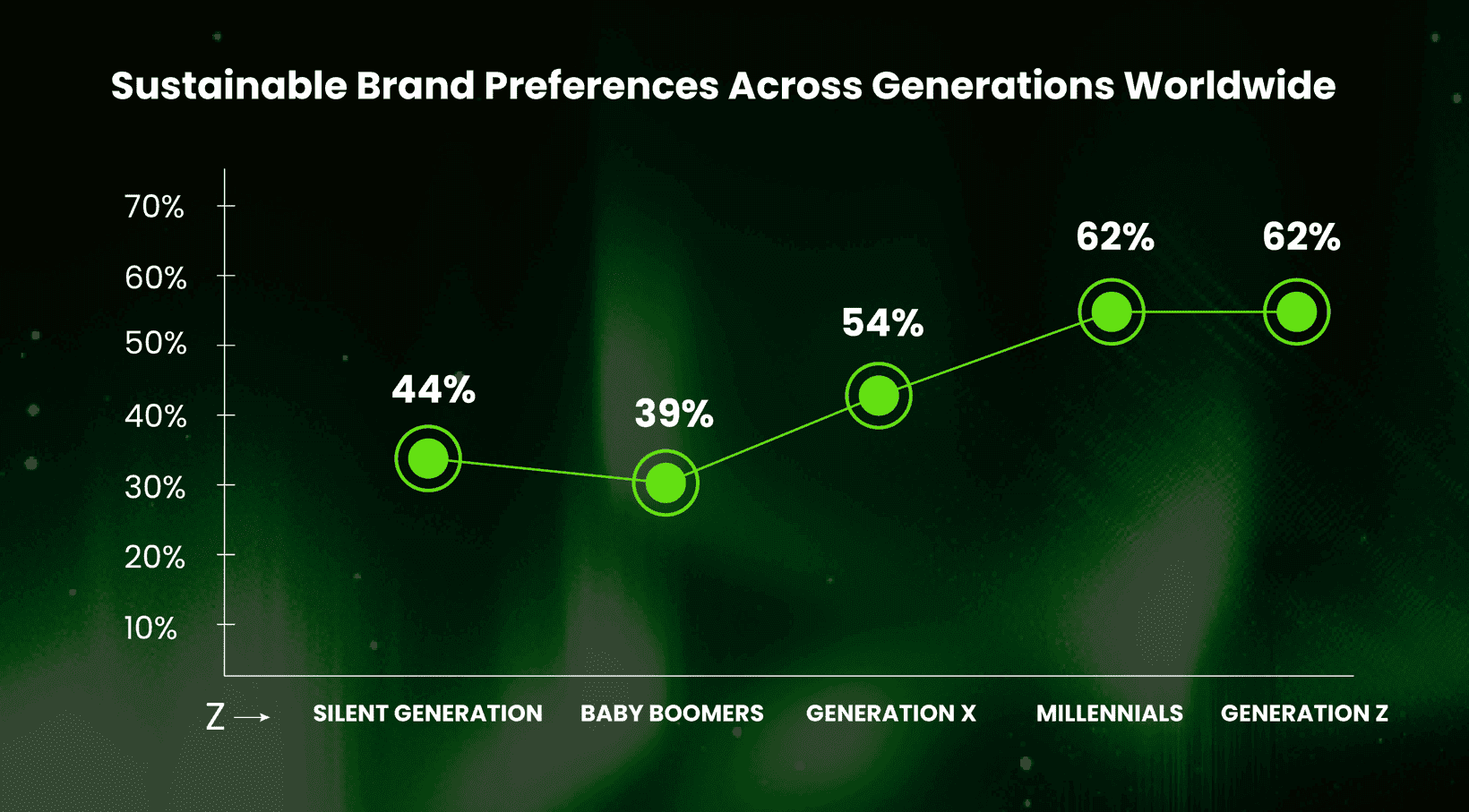
Not only governments but also consumers are actively voicing their opinions on sustainable advertising, opting for brands that use decarbonized advertising. Environmental awareness is rapidly becoming the foremost expectation among the younger, digitally native consumers who account for most of the regional population. While 62% of global Gen Z shoppers prefer purchasing from sustainable brands, 73% have no problems paying a premium for companies prioritizing sustainability.
Customers assess brands based on their sustainability credentials, considering factors such as social media advocacy, global climate change, and the visibility of value propositions. Sustainability is the differentiator in consumer preferences, influencing every aspect of the supply chain, including carbon footprints.
Sustainability is no longer just a theoretical consideration but the need of the hour for the digital advertising sector.
Disruptive Technologies Making Digital Ads of The Future Cleaner, Greener, Smarter
As this region witnesses the emergence of sustainability-focused players, awareness of the environmental impact of digital media is growing leaps and bounds. Proactive brands and agencies emphasize adopting models that integrate sustainability as a prime mover of their digital advertising strategy as they realize the challenges of profitability and ecological responsibility.
Conscious media, which was established in Dubai in April, 2024, is helping the region transition to green media with digital campaigns and minimal environmental impact. Similarly, by emphasizing carbon measurement and decarbonization-focused KPIs, the collaboration between UM MENAT and Teads establishes the foundation for a sustainable media ecosystem in Saudi Arabia.
The media landscape is still pretty fragmented, with many solutions that focus on different aspects of the advertising lifecycle, even though the momentum for sustainability is picking up pace. For brands, the lack of an integrated, end-to-end platform leads to bottlenecks, from operational inefficiencies to haphazard emissions tracking that hamper campaign performance and sustainability objectives. The lack of a comprehensive solution is becoming a growth constraint for advertisers looking to align profitability with environmental responsibility.
It fits right into the organizational framework of brands keen to achieve their sustainability objective without compromising their performance and deliverables. Furthermore, it is purposefully built to align and support government-led programs such as the UAE Net Zero by 2050 Strategic Initiative.
Conclusion: Economic Growth in Line with Climate-Conscious Commitments
With the MENA digital advertising market expected to exceed $20 billion in annual revenue by the end of 2025, there has never been a better time to adopt climate-conscious innovations. Brands prepared for the future must prioritize incorporating sustainability into their tech stacks and processes without sacrificing overall performance and ROI. These changes don’t imply efficiency compromises but the rethinking of campaign deployment and optimization. Choosing the right partner is the key first step that can help brands transition to innovations aligned with sustainable practices.
Advertisers are proving that sustainability and scalability can coexist by utilizing platforms like Climaty AI. They can convert their media strategies into data-driven, carbon-accountable mechanisms by employing real-time optimization, emissions modeling, and intelligent automation. With the region establishing itself as a global leader in digitalization, MENA marketers have an excellent opportunity to develop a standard where climate-aligned advertising becomes the new standard for operational excellence.



