
From Reporting to Real-Time Accountability: How Agentic AI Changes Media Ops
Published on
Summary
Media operations today are full of dashboards, reports, and post-campaign analyses. On paper, everything looks optimised. In practice, most decisions still arrive too late to matter.
Budgets are reviewed after spend has already been locked in. Creative performance is analysed once fatigue has set in. Supply paths are audited after inefficiencies have already compounded. What is called “optimisation” often turns out to be a retrospective explanation.
This gap between the promise of optimisation and the reality of execution has existed for years. What’s changing now is not the volume of data, but the expectation of accountability. Leaders no longer want to know what happened. They want to know why it happened, who or what decided it, and whether it could have been prevented in real time.
This is where agentic AI begins to matter in media operations. Not as another analytics layer, but as a system that introduces live accountability into how media decisions are made, executed, and governed.
The Status Quo in Media Operations: What “Optimised” Really Means Today
In most organisations, media ops still follow a familiar rhythm.
Campaigns run continuously. Data is collected across platforms. Reports are generated daily, weekly, or monthly. Adjustments are made once patterns become visible.
This model assumes that:
- reporting equals control,
- faster dashboards equal faster decisions,
- and human intervention can keep up with system-level complexity.
In reality, most media teams operate with lagging signals.
According to McKinsey, marketing teams typically take days to weeks to act on performance insights, even when data is available in near real time.
During that lag, budgets continue to flow, creatives continue to fatigue, and inefficient supply paths remain active.
“Optimisation” in this context often means:
- reallocating budget after overspend has occurred,
- pausing creatives after performance has already dropped,
- or correcting targeting once acquisition costs have already risen.
The system isn’t broken; it’s simply not designed for live accountability.
Why Traditional Media Optimisation Breaks Down at Scale
The real problem with retrospective optimisation isn’t that it’s inefficient. It’s that by the time patterns become visible, the opportunity has already passed.
In most media teams, inefficiencies don’t show up as obvious failures. They show up as small, compounding losses - slightly misplaced budgets, creatives that run a little too long, inventory that performs just well enough to avoid scrutiny. Individually, these decisions feel reasonable. Collectively, they add up to significant waste.
This is why industry studies consistently surface the same numbers.
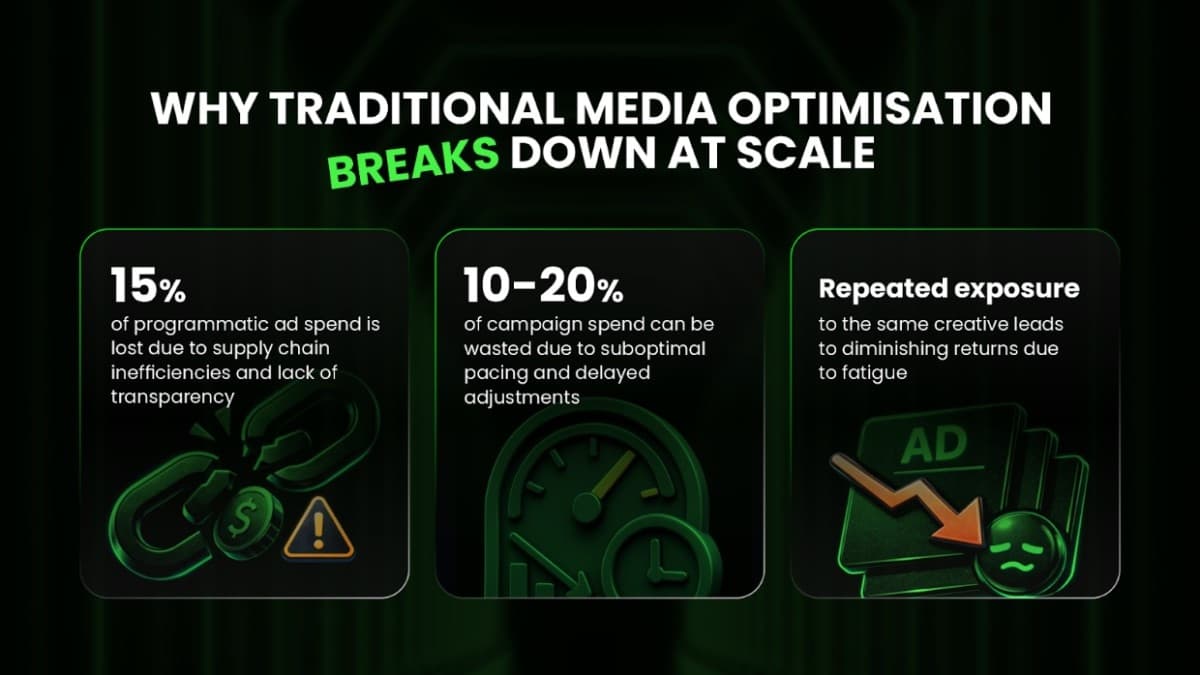
For example, research by ISBA and PwC found that up to 15% of programmatic ad spend is lost due to supply chain inefficiencies and lack of transparency.
That loss isn’t caused by a single bad decision. It’s the result of fragmented supply paths, limited visibility, and decisions made without full context, often discovered only after campaigns have finished running.
A similar pattern appears in pacing and optimisation. Gartner estimates that 10–20% of campaign spend can be wasted due to suboptimal pacing and delayed adjustments, particularly in high-frequency performance environments.
Here again, the issue isn’t lack of intent. Teams want to optimise. The challenge is timing. By the time overspend or underperformance becomes clear in reports, spend has already been committed and learning comes too late to influence outcomes.
Creative performance follows the same curve. Meta’s own guidance shows that repeated exposure leads to diminishing returns, with creative fatigue setting in well before teams typically intervene.
Yet creative rotation is still often manual, review-driven, and reactive, meaning fatigue is identified after performance has already declined.
Across all three examples, the pattern is consistent. Feedback loops are slow, and humans are asked to make sense of fragmented signals under time pressure. Teams end up:
- reconciling conflicting metrics across platforms,
- interpreting performance after the fact,
- and making judgment calls once the damage has already occurred.
As media environments grow more complex with more channels, formats, and constraints, this delay compounds. What breaks down at scale isn’t effort or expertise. It’s the ability of a retrospective model to keep up with decisions that now need to be made continuously.
Why This Gap Persists Even with “Advanced” Media and Ad Tech Tools
It’s tempting to assume the problem is lack of tooling. In reality, it’s how tools are designed to be used.
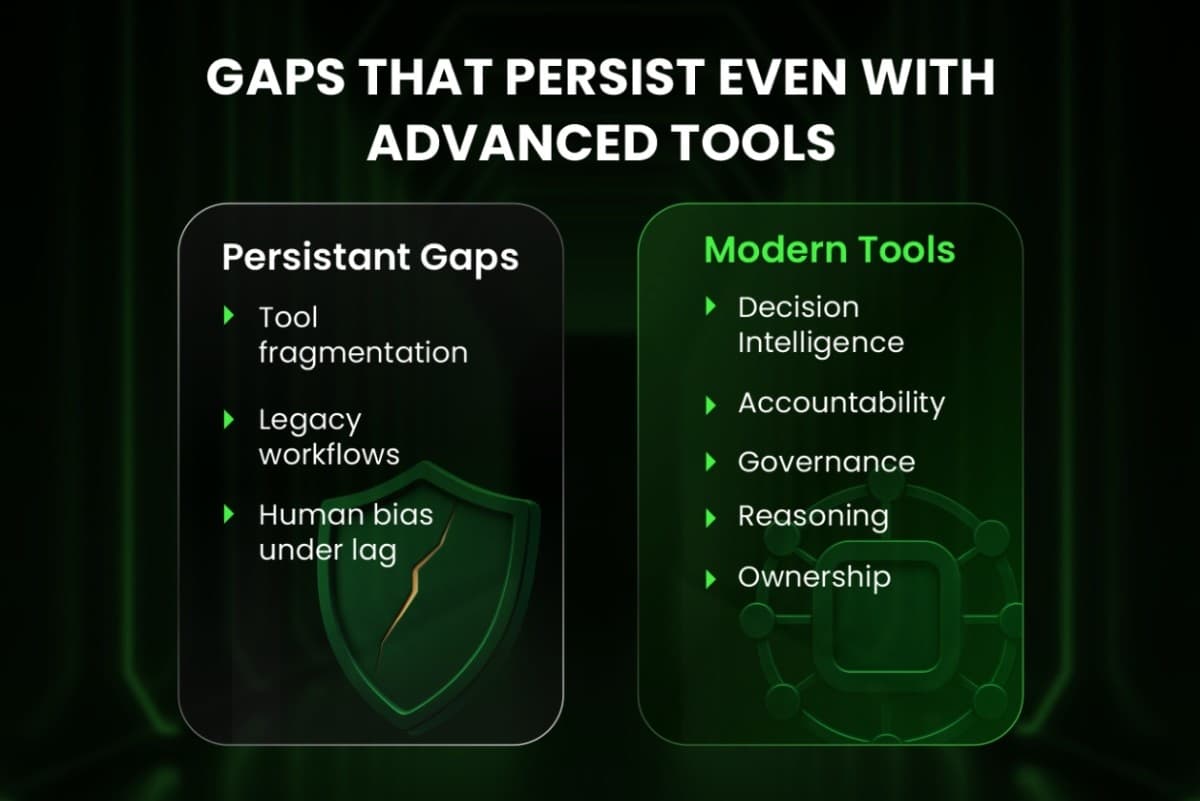
Three structural reasons explain why delayed accountability persists:
- Tool fragmentation
Most media stacks are built around reporting and execution, not reasoning. Performance data lives in one place, decisions in another, and governance somewhere else entirely. - Legacy workflows
Media ops workflows were designed when campaigns changed slowly. Today’s environments require continuous adjustment, but operational models haven’t caught up. - Human bias under lag
When decisions are delayed, teams rely more heavily on intuition, averages, and heuristics. Research shows that delayed feedback significantly increases decision bias and reduces optimisation quality.
The result is a system that looks controlled but behaves reactively.
How Agentic AI Enables Real-Time Accountability in Media Operations
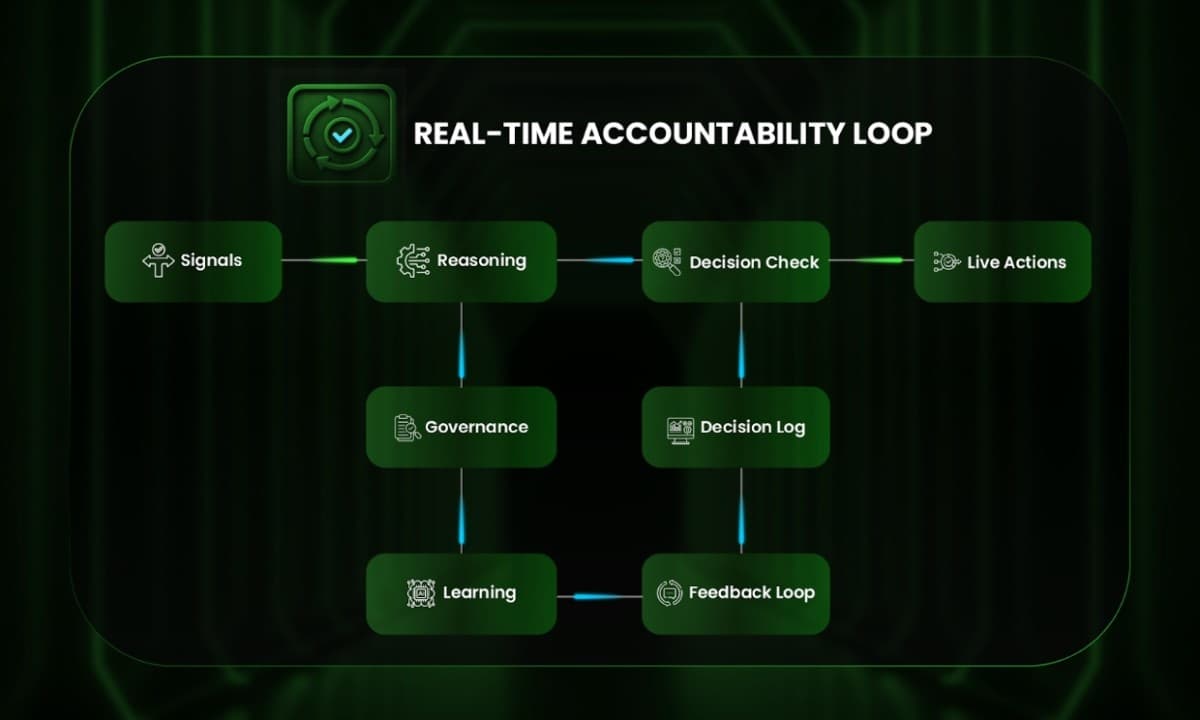
Agentic AI changes media operations by introducing continuous decision loops, not just faster reporting.
Instead of waiting for humans to interpret performance drops, agentic systems:
- monitor signals continuously,
- reason about what’s changing,
- take action within defined boundaries,
- and log why those actions were taken.
This is the difference between observability and accountability.
According to McKinsey, organisations experimenting with agentic AI report early gains not from speed alone, but from decision traceability, the ability to link outcomes directly to decisions made by systems.
In media ops, this means:
- budget shifts are explained, not just executed,
- creative rotations happen before fatigue peaks,
- inventory decisions adapt to quality signals in real time.
Accountability moves from after-the-fact justification to live responsibility.
What Real-Time Accountability Looks Like Inside Media Ops Workflows
In practice, agentic AI doesn’t replace media teams. It changes how decisions are handled between reviews.
Budget pacing
Instead of static pacing rules, agentic systems adjust spend continuously based on delivery, performance, and downstream signals, preventing end-of-cycle overspend or underutilisation.
Creative rotation
Rather than waiting for weekly reports, creative fatigue signals trigger proactive rotation, guided by learned performance patterns.
Inventory routing
Supply paths are evaluated continuously, allowing low-quality or high-waste inventory to be deprioritised in real time.
These workflows turn optimisation into an always-on process, not a periodic one.
Why Real-Time Media Accountability Requires Governance and Controls
Real-time accountability does not mean unchecked automation.
In fact, governance becomes more important, not less.
Effective agentic media systems include:
- audit logs that explain why decisions were made,
- human-in-the-loop thresholds for sensitive actions,
- explainability layers that allow teams to review system reasoning.
Gartner predicts that over 40% of poorly governed agentic AI projects will be abandoned due to lack of trust and control.
Accountability only works when autonomy is bounded.
Why Media Accountability Must Include Carbon and Sustainability Metrics
One of the biggest blind spots in traditional media optimisation is external cost.
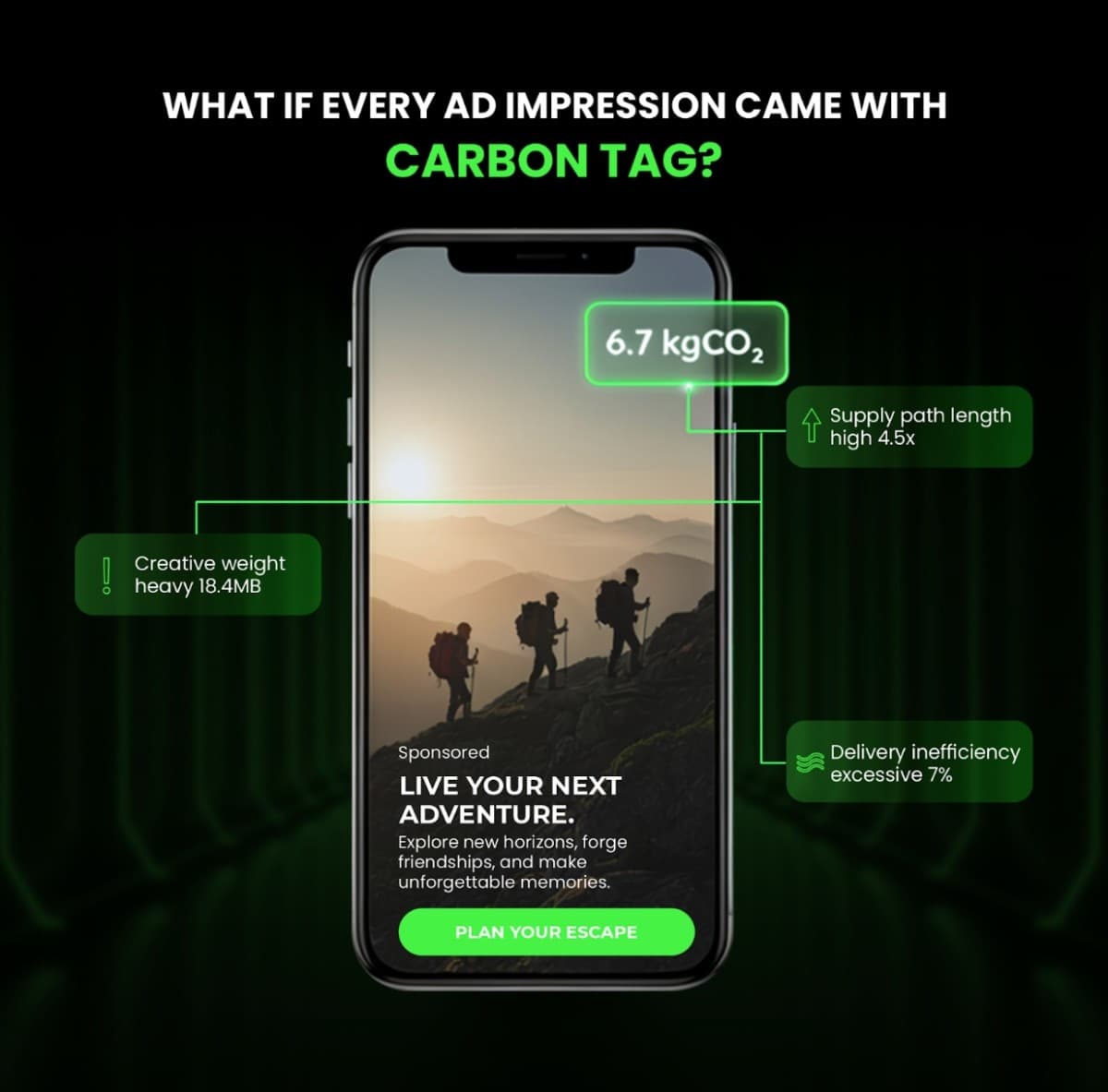
Digital advertising carries a measurable carbon footprint, influenced by:
- supply path length,
- creative weight,
- delivery inefficiencies.
Scope3 estimates digital advertising emissions at 3.5–7 gCO₂e per impression, depending on format and supply chain quality.
Without real-time accountability, these costs remain invisible. Agentic AI makes it possible to:
- evaluate carbon impact alongside performance,
- deprioritise wasteful inventory,
- optimise toward outcomes that balance efficiency, safety, and sustainability.
Optimisation can no longer be one-dimensional.
Why Climaty AI Is Built for Real-Time Media Accountability
Climaty AI is designed around real-time media accountability, not just optimisation.
By combining:
- agentic decision-making,
- continuous performance reasoning,
- traceable audit logs,
- and integrated carbon intelligence,
Climaty AI enables media teams to understand not just what changed, but why it changed across performance, cost, and sustainability dimensions.
This is not about adding another dashboard. It’s about making media systems answerable in real time.
Frequently Asked Questions
What is real-time accountability in media operations?
Real-time accountability in media operations means media decisions are monitored, executed, and explained continuously, not reviewed only after spend is complete.
How is agentic AI in media ops different from automation?
Automation follows predefined rules. Agentic AI in media operations reasons, adapts, and explains decisions within defined constraints.
Does agentic AI remove human control from media teams?
No. Agentic AI increases transparency and allows humans to intervene earlier and more effectively in media decision-making.
Can agentic AI reduce media waste and inefficiency?
Yes. Faster decision loops reduce overspend, inefficiencies, and missed optimisation windows in media operations.
How does real-time accountability improve media transparency?
By linking outcomes to decision logs and reasoning trails rather than relying on static reports.
Why include carbon metrics in media operations optimisation?
Because sustainability is becoming a measurable cost and risk in digital advertising, not a separate initiative.
Is real-time media accountability only relevant for large advertisers?
No. Media complexity scales with channels and formats, not just budgets.
What is the biggest blocker to real-time accountability in media ops today?
Fragmented data and lack of real-time decision infrastructure remain the primary obstacles.



