
Can You Really Trust AI Agents with Marketing Your Brand?
Published on
Summary
Unlike traditional AI models that rely on human direction, agentic systems can act autonomously, making strategic decisions in near real-time. But can marketers afford to trust autonomous agents with their brands?
Here's a quick look at what Agentic AI is, its applications in marketing, and how leading marketers can deploy agentic systems without compromising on brand safety.
What is Agentic AI?
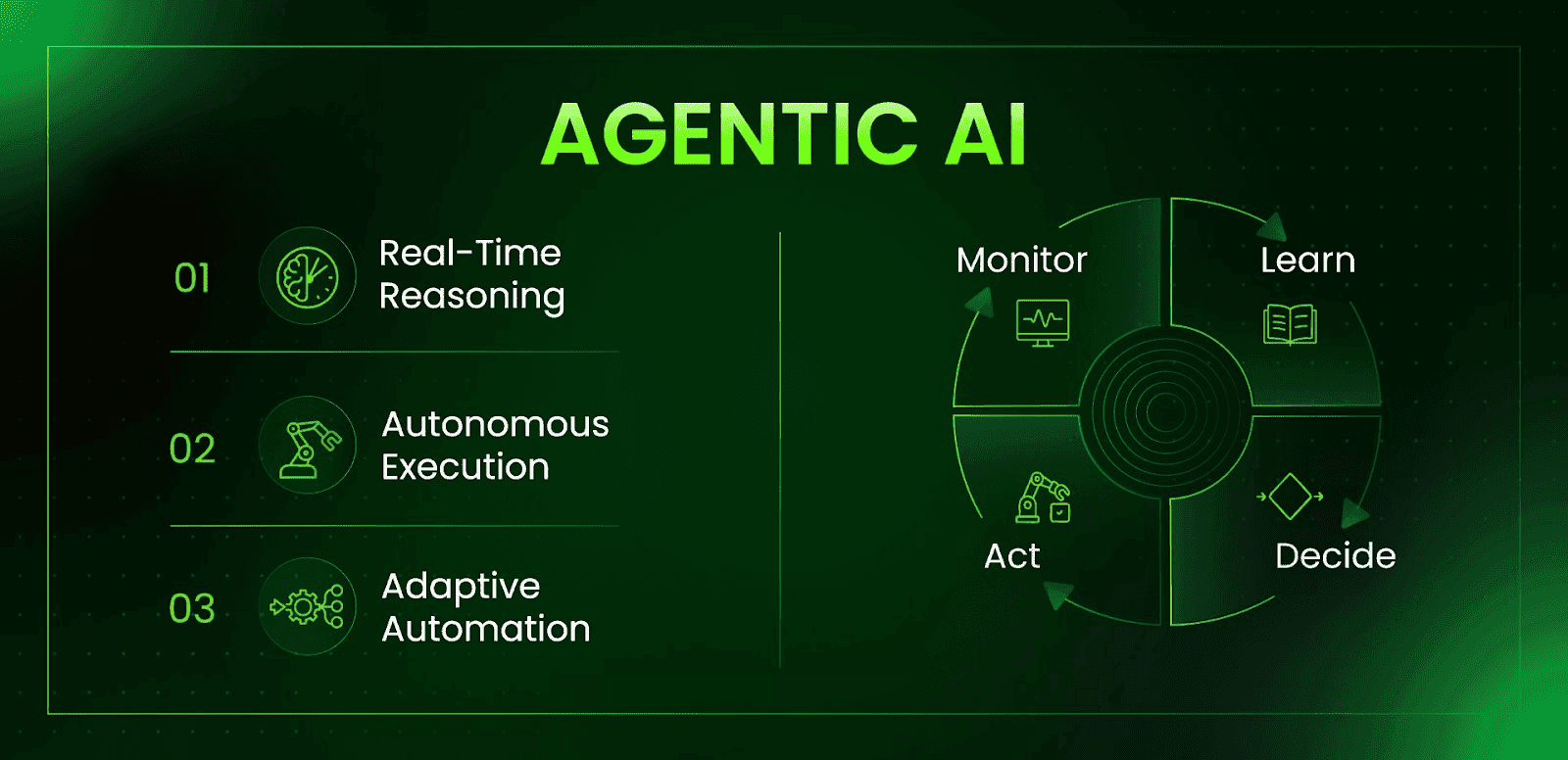
Agentic AI refers to intelligent systems capable of independently taking initiative, executing tasks, and optimizing outcomes in real-time. These systems deploy AI agents, which are digital "workers" that continuously monitor inputs and make proactive decisions.
Unlike traditional automation tools, agentic AI doesn't require predefined instructions for every situation. Instead, it can reason, adapt, and take initiative within guardrails. This makes it ideal for environments like digital advertising, where decisions must be made and adjusted across multiple dimensions at speed and scale.
Uncanny Valley: The Risks of AI-led Marketing
AI can be a double-edged sword when used without human oversight and optimization input. There have been cases where AI systems "hallucinated" outputs, leading to lost customer trust over misleading or fabricated information.
In other instances, such as Coca-Cola's infamous AI-generated Christmas ad campaign, the ad led customers down the uncanny valley, further cementing consumer discomfort with AI, and by association, with the brand too.
These risks underscore the need for brand safety guardrails when using any type of AI for marketing. Without them, AI may prioritize performance at the cost of tone, accuracy, or regulatory compliance.
However, unlike generative and predictive AI, Agentic AI is capable of analyzing live audience reactions to ongoing ads, then using that data to optimize the campaign overall. AI agents for marketing can be taught brand guidelines for safety and have checkpoints built into the delivery process for manual intervention.
What to Consider Before Using Agentic AI
While Agentic AI systems offer enormous upsides to marketing, success depends on how thoughtfully the agents are deployed. Whether it's the end-user reaction to an AI-driven campaign or rules for brand safety, here's what marketers should keep in mind:
1. Autonomy Requires Guardrails
Agentic systems don't mean fully hands-off execution. Marketers can (and should) set KPIs, monitor feedback, and apply constraints to keep agents aligned with brand safety guidelines.
2. AI Agents Collaborate with Marketers
Marketing teams must work alongside agents. Creatives can prioritize working on top-level strategy while agents optimize distribution and targeting. Instead of handing over the controls to AI, this model retains marketer oversight and control.
3. Prioritize Different Metrics
When using Agentic AI, the KPIs one should prioritize move away from impressions and CTRs, focusing instead on ROAS, customer retention, and CPA.
4. Early Adoption Means Smarter Systems
AI agents that learn from more campaign cycles can grow faster. Marketers and brands who make the switch early will benefit from richer contextual feedback and increasingly efficient agents.
Enterprise Confidence in Agentic AI is Growing
As per Gartner's Emerging Technologies 2025 report, "over 60% of new enterprise AI deployments in 2025 will include agentic capabilities". The global agentic AI market is projected to grow from $2.9 billion in 2024 to $48.2 billion by 2030, with a CAGR exceeding 57%.
Evaluate Agentic AI Solutions for Your Brand
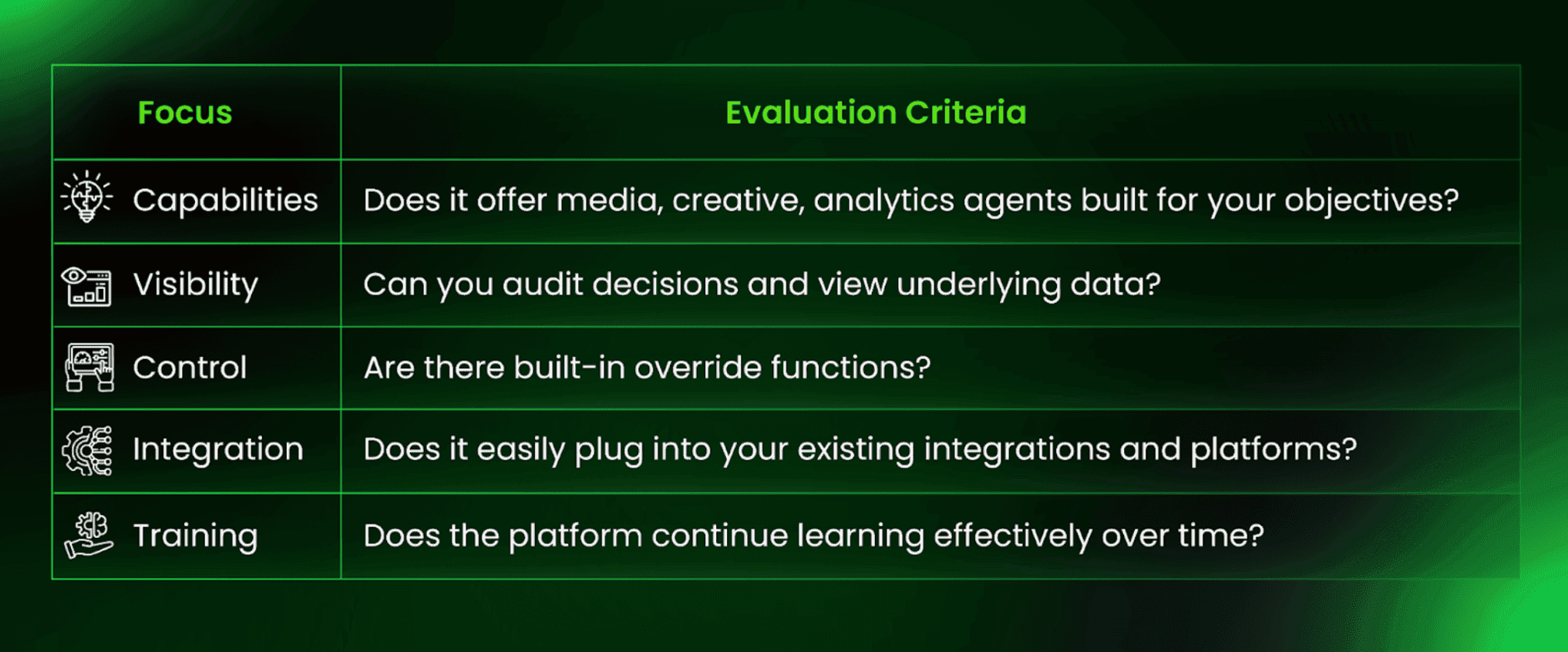
Agentic AI is not a cookie-cutter solution for every brand. Choosing the right agent means understanding your campaign goals and the capabilities you expect from autonomous systems.
Here's a quick guide for when you make that decision.
Climaty AI: 360-degree Agentic AI Marketing Solutions
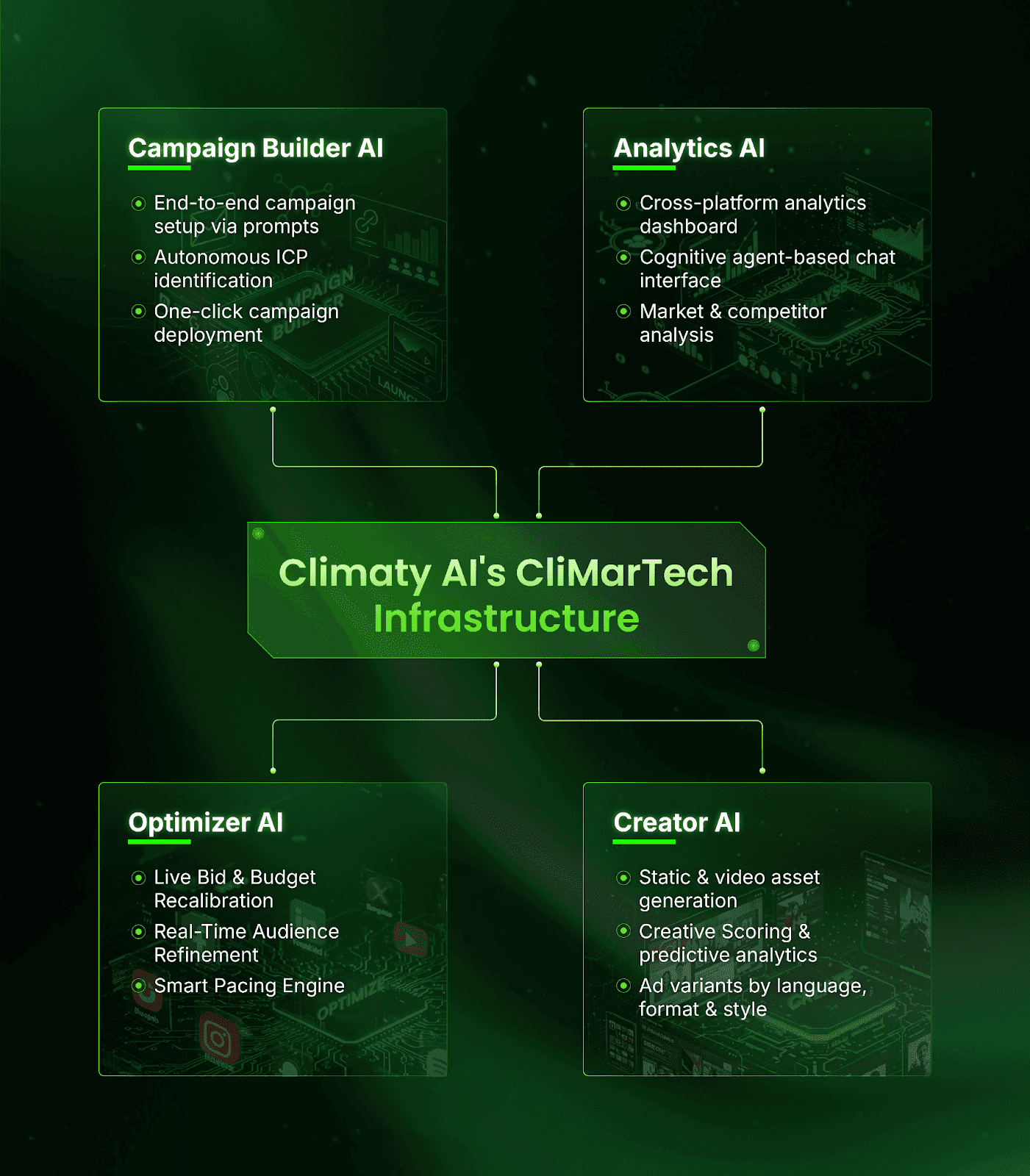
Climaty AI's platform is built around a core network of purpose-built AI agents for marketing, each designed to operate like a domain expert for media teams. They act autonomously but stay aligned with your strategy and brand guidelines, learning from your campaigns at every step.
Here's what Climaty AI's marketing AI agents do:
-
1. Campaign Builder AI
A prompt-to-performance system that builds multi-format campaign frameworks in minutes, no manual stitching or tech dependency required.
Core Capabilities:
• Prompt-based full-funnel campaign generation
• Persona-driven audience selection and targeting logic
• Structured buildout of ad sets, creatives, and tracking
• Bulk deployment and one-click go-live capabilities
• Automatically aligns media plan with platform rules and brand constraints
-
2. Analytics AI
A performance intelligence layer that consolidates data across platforms, retrieves insights by funnel stage, and responds to marketer queries through an interactive, cognitive chat interface.
Core Capabilities:
• Unified, cross-platform analytics dashboard
• Real-time KPI deviation alerts
• Interactive AI assistant for summaries, diagnostics, and competitor queries
• Market and competitor benchmarking
-
3. Creator AI
A performance-aware creative engine that scores, improves, and generates ads across formats while respecting brand tone, guidelines, and visual identity.
Core Capabilities:
• Creative scoring and predictive analytics for static and video formats
• Generation of performance variants by size, format, and language
• Full-cycle asset creation via Image Flow, Video Flow, and Video from Scratch
• Auto-resizing and multi-platform formatting
• Supports full brand control and approval flow
-
4. Optimizer AI
A real-time campaign optimization layer that reads market signals and recalibrates budget, bids, and creative delivery for maximum ROAS.
Core Capabilities:
• Live bid and budget redistribution across platforms
• Smart pacing engine for spend alignment
• Creative fatigue detection and automated rotation
• Real-time targeting refinements based on audience engagement trends
Conclusion
Agentic AI is reshaping how brands approach media execution, moving from rule-based automation to systems that act proactively and flexibly.
As more enterprises explore agentic capabilities, early users are gaining insight into how autonomous AI agents can offer measurable value, especially in performance marketing.
Previously, static automation, Generative AI, and even Predictive AI helped accelerate and improve marketing capabilities. Now, agentic AI is the next leap in this chain of progress.
The marketers' opportunity lies in systems that respond to context, adapt in real-time, and reduce manual overhead without compromising brand safety. With the right configuration, visibility, and override controls, AI agents can be a secure and strategic addition to any media stack. The brands that act early are likely to gain a competitive edge relevant to the new era of AI agents in marketing.



